You want the manicured lawns, the courtside towel service, and the post-match sauna, but you have zero interest in paying a $50,000 initiation fee to play golf. You are not alone. A quiet revolution is happening behind the gated entrances of private clubs, and it involves a wiffle ball and a paddle.
Joining a pickleball country club is becoming the savviest move for players who want luxury amenities without the traditional “golf tax.” However, the landscape is tricky. Some clubs embrace the sport with open arms, while others treat it like an annoying trend that needs to be hidden in the back corner of the parking lot. Before you sign a contract that locks you into monthly dues for a year, you need to know exactly what to look for.
This isn’t just about finding a place to play; it’s about navigating the complex social hierarchy, understanding hidden fees, and ensuring you aren’t paying premium prices for subpar facilities. Whether you are looking at a pickleball country club houston hotspot or a local venue, this guide will reveal the industry secrets most membership directors won’t tell you.
The “Social Membership” Hack: Luxury for Less
The biggest misconception about private clubs is that you must be a “Full Member” to enjoy the facilities. In the world of country clubs, the “Full Golf” membership is the cash cow, often costing tens of thousands of dollars upfront. But if you are strictly a pickleball player, you can exploit the “Social” or “Sports” membership loophole.
Most traditional clubs offer a tiered system:
- Full Equity Golf: Includes everything. Most expensive.
- Sports/Racquet: Includes tennis, pickleball, pool, and dining. Significantly cheaper.
- Social/House: Dining and pool only (sometimes limited court access).
By targeting the “Sports” tier, you can often access the same locker rooms, dining halls, and social events as the golfers for 60% to 80% less. However, you must ask a critical question: “Does the Sports membership include unlimited court time, or are there court fees per hour?” Some clubs lure you in with a low monthly due but charge $20 per hour to play, which adds up fast.
Comparing models is essential. For instance, dedicated facilities like the lake country pickleball club model often have straightforward pricing, whereas traditional multi-sport clubs often hide “Food & Beverage Minimums” in the fine print. If your membership costs $200 a month but requires you to spend another $150 on club dining, your real cost is $350. Always do the math before you join.
The Facility Audit: Don’t Settle for “Blended Lines”
Nothing screams “second-class citizen” louder than a tennis court with confusing, light-blue pickleball lines painted over the doubles alley. When touring a potential club, your facility audit needs to be ruthless.
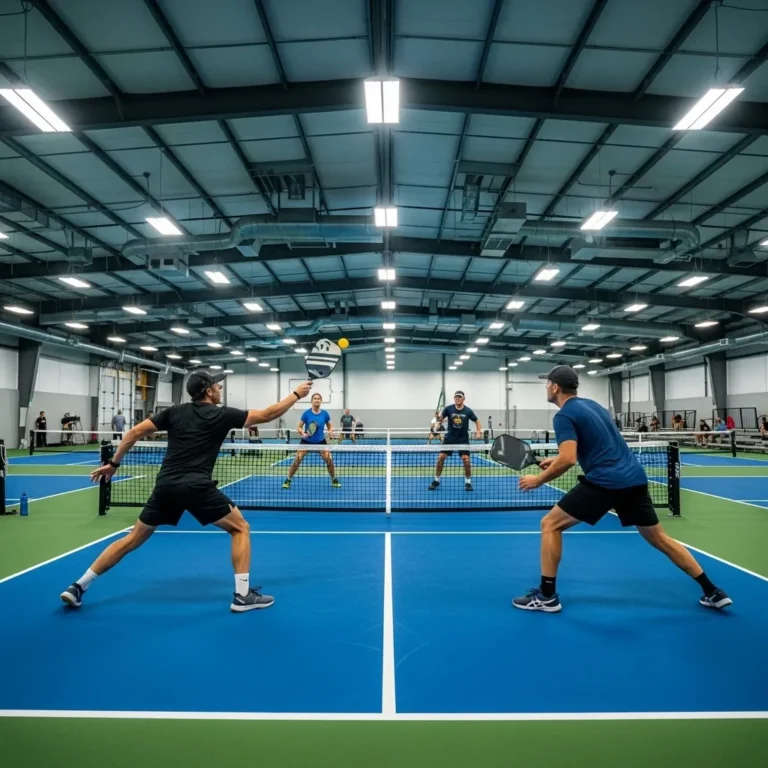
If you are paying a premium for country club pickleball, you should expect dedicated courts. Blended lines affect visual clarity and ball bounce. Furthermore, temporary nets that sag in the middle are unacceptable at this price point. You need to ensure the club adheres to strict standards regarding equipment.
One of the most overlooked technical aspects is the net setup. Are they using permanent posts, or heavy-duty portable nets on wheels? For a deeper dive into what the regulations actually require, you should understand the standard pickleball net height. If the club’s nets are “eyeballed” by the maintenance crew rather than measured to 34 inches at the center, it shows a lack of respect for the game.
The “Noise” Factor and Lighting
Another “gotcha” is the play schedule. Because pickleball is louder than tennis, many clubs in residential areas have strict Conditional Use Permits (CUPs) that ban play after 6:00 PM or 8:00 PM. If you work a 9-to-5 job, a club with no lights or an early noise curfew is useless to you. Ask to see the Conditional Use Permit restrictions specifically for the pickleball courts, not the tennis courts.
The Vibe Check: Tennis Tradition vs. Pickleball Party
There is a cultural war happening at many clubs. Tennis culture is historically rooted in silence, tradition, and strict etiquette. Pickleball culture is rooted in socializing, cheering, and music. When these two worlds collide at a shared facility, friction is inevitable.
When touring, observe the interaction between players. Are the pickleball courts segregated far away from the clubhouse, or are they central to the social hub? The gold standard for integration is undoubtedly brookhaven country club pickleball facilities, which have proven that a club can host massive tournaments and social play without alienating traditional members. They treat pickleball as a primary sport, not a nuisance.
If you sense that the tennis committee holds all the power, you may face issues with court reservations. In many mixed clubs, tennis players have “grandfathered” rights to prime Saturday morning slots. You want a club with a separate “Pickleball Committee” or Director who advocates for your court time.
To understand the nuances of this rivalry and why the vibes are so different, it helps to read up on the fundamental differences in pickleball vs tennis culture. Knowing this will help you gauge if a club is truly “pickle-friendly” or just tolerating the sport for the revenue.
Etiquette & Attire: Avoiding the “All-White” Trap
You walk onto the court in your neon green shirt and black shorts, ready to play, only to be tapped on the shoulder by the pro. “I’m sorry,” he says, “but this is an all-white facility.”
While public parks are a free-for-all, private clubs often have strict dress codes. Some adhere to the Wimbledon-style “90% white” rule, while others simply require “appropriate racquet attire.” This usually means no cotton t-shirts, no swim trunks, and definitely no running shoes that leave black scuff marks on the court surface.
Before you commit, check the bylaws. If the dress code is too stiff, it might kill the fun, casual vibe that makes pickleball great. However, if you are joining a club, you want to look the part. Investing in proper court shoes is mandatory for safety and adherence to club rules. We highly recommend checking out specific court shoes like K-Swiss pickleball shoes, which are generally accepted at most private clubs due to their non-marking soles and professional look.
Furthermore, knowing the unwritten rules is just as important as the dress code. From how to enter a court to how to call the score, you should be brushed up on your pickleball attire rules and general etiquette before your first mixer.
The “Hidden” Fees No One Tells You About
The initiation fee is just the tip of the iceberg. When analyzing the contract for a pickleball country club, look for these financial sinkholes:
- Capital Assessments: This is the scariest one. If the club decides to renovate the 18th hole of the golf course for $2 million, do “Sports Members” have to chip in? You should never be liable for assessments on amenities you are restricted from using.
- Guest Fees: You will want to bring friends. Some clubs charge a reasonable $10 guest fee; others charge $50. High guest fees can isolate you from your non-member playing partners.
- Locker Fees & Bag Storage: Do you need to rent a locker, or is it included? Where do you store your gear? If you are carrying a large pickleball bag, you don’t want to be hauling it from the parking lot every single time if storage is available.
Training & Competition: More Than Just Social Play
Finally, a club is only as good as its programming. A facility might have beautiful courts, but if there is no one to organize games, it’s a ghost town. Ask if there is a certified Pickleball Professional on staff. Note: A tennis pro who “also teaches pickleball” is usually not enough. You want a specialist certified by USA Pickleball or PPR.
Does the club use a rating system (like DUPR) to organize play? “Open Play” is fun, but eventually, you will want to play with people at your skill level. A good club organizes round-robins by skill level (e.g., 3.0-3.5 mix). If you aren’t sure where you stand, a good Director will offer an assessment. Understanding your pickleball ratings is crucial for getting the most out of a private club environment.
If you are looking to improve, ask about the clinic student-to-teacher ratio. At a premium club, it should never be more than 4:1. Private instruction should also be readily available. If you are serious about leveling up, high-quality pickleball lessons are the fastest return on your membership investment.
Conclusion: The 3 Questions to Ask Before Signing
Joining a club can elevate your game and your social life, provided you choose the right one. Don’t let the shiny clubhouse distract you from the realities of the court.
Before you sign the check, ask the Membership Director these three questions:
- “Is the initiation fee equity-based (partially refundable) or non-equity (sunk cost)?”
- “Can I see the court reservation sheet for the last three Saturday mornings?” (This proves if courts are actually available).
- “Are there any planned capital assessments in the next 24 months?”
The best pickleball country club is one where you feel like a priority, not an afterthought. Take a tour during peak hours, listen to the noise level, check the lighting, and ensure the culture matches your energy. See you on the courts!
You May Also Like