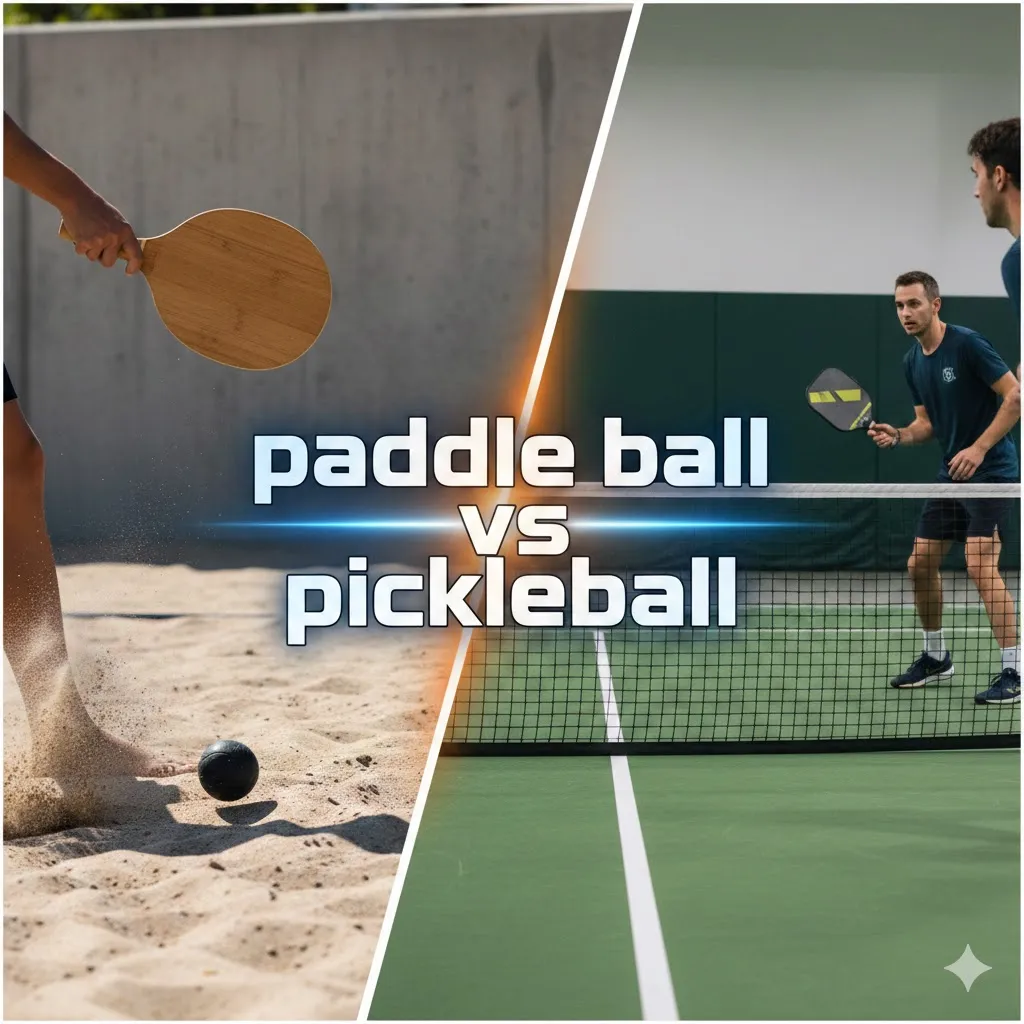
Introduction
If you have stepped near a local park or beach recently, you have likely heard the unmistakable “pop” of a racket striking a ball. Racket sports have exploded in popularity globally, leading to a massive wave of new players hitting the courts. However, this boom has also brought a wave of confusion. When it comes to paddle ball vs pickleball, many beginners assume they are just different names for the exact same game. This couldn’t be further from the truth.
While both sports share a superficial resemblance—they both involve hitting a ball with a solid paddle rather than a strung racket—their origins, equipment, court layouts, and gameplay mechanics are fundamentally distinct. In this comprehensive guide, we will break down everything you need to know about the pickleball vs paddle ball debate. By the end of this article, you will understand the exact differences in gear, court specifications, and rules, helping you decide which of these fantastic sports is right for you.
Are Paddle Ball and Pickleball the Same Thing?
To put it simply: no, they are entirely different sports. To resolve the confusion, we first need to define what each game actually is, as “paddle ball” is often used as a blanket term for several different activities.
What is Pickleball?
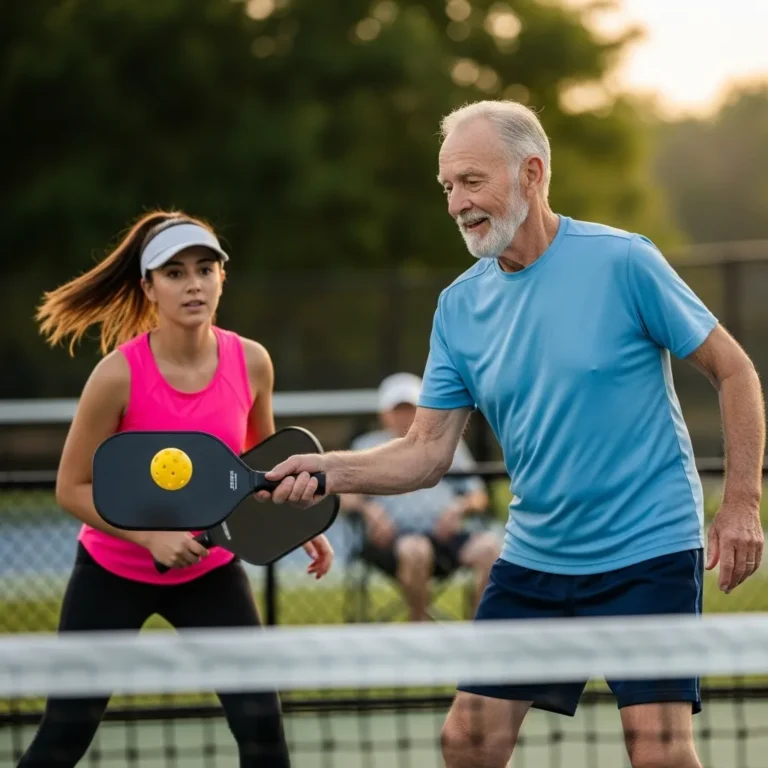
Pickleball is a highly structured, net-based sport that combines elements of tennis, badminton, and ping-pong. It is played on a specific court with a perforated plastic ball (similar to a wiffle ball) and composite or wooden paddles. It has a rigid set of rules, a massive competitive scene, and a strong community focus.
What is Paddle Ball?
Paddle ball generally refers to two distinct, less formalized games:
- One-Wall Paddleball: Often played in urban environments (like New York City), this game involves hitting a small rubber ball against a single wall. There is no net involved.
- Beach Paddleball (Frescotennis/Matkot): A cooperative beach game where two players hit a rubber ball back and forth without letting it hit the sand. There are typically no boundaries and no net.
Note on Padel: It is also crucial not to confuse either of these with “Padel,” which is a Mexican racket sport played in an enclosed glass court. If you are wondering about that specific comparison, check out our detailed guide explaining if is padel the same as pickleball.
Equipment Breakdown: Paddle Ball vs Pickleball Racket and Balls
The most noticeable physical differences emerge when you compare the paddle ball vs pickleball racket and the balls used in each game.
The Racket/Paddle Differences
If you look closely at the gear, the engineering serves completely different purposes:
- Pickleball Paddles: These feature a solid, continuous face. Modern paddles are highly engineered with polymer honeycomb cores and surfaces made of carbon fiber, fiberglass, or graphite. They are designed to absorb the shock of a hard plastic ball and generate spin. There are no holes in the face of a legal pickleball paddle.
- Paddle Ball Rackets: Whether for one-wall or the beach, these rackets are typically made of solid wood, carbon, or fiberglass and are easily identifiable by the holes drilled through the face. Why do they have holes? The holes reduce aerodynamic drag, allowing players to swing faster through the air, and they reduce the overall weight of the solid material.
The Ball Dynamics
The balls dictate the pace and physics of the game:
- The Pickleball: A hard, hollow plastic ball with precisely drilled holes. It is designed to fly smoothly but decelerate quickly due to wind resistance. If you are curious about the variations, you can read our breakdown on the difference between indoor and outdoor pickleballs.
- The Paddle Ball: A small, solid, or pressurized rubber ball (similar to a squash or racquetball). It is highly bouncy and travels at incredibly high speeds when struck.
Can you use a pickleball paddle to play paddle ball at the beach? While you physically can, it is highly discouraged. The heavy, fast rubber ball used in beach paddle ball can permanently damage or delaminate the delicate honeycomb core of an expensive pickleball paddle.
Court Size and Layout: Paddle Ball vs Pickleball Court
The playing environments dictate the flow of the game. The paddle ball vs pickleball court comparison highlights why these sports demand different physical movements.
Pickleball Court Setup
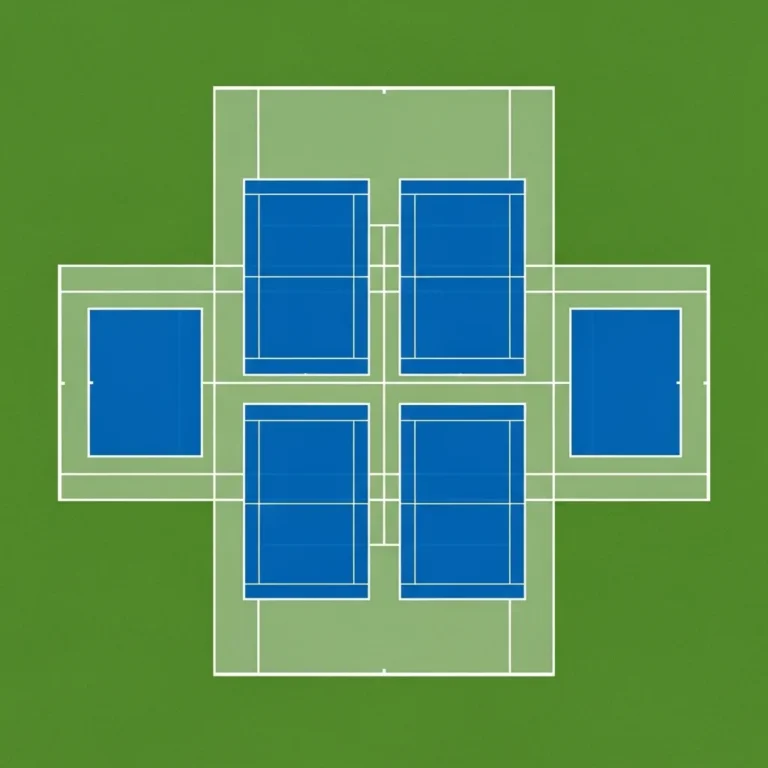
Pickleball requires a highly specific, standardized court. The standard pickleball court dimensions are 20 feet wide by 44 feet long, which is the exact size of a badminton double’s court. The court is divided by a net suspended at 34 inches in the center.
The most distinctive feature of the pickleball court is the Non-Volley Zone, affectionately known as the “Kitchen.” This 7-foot area on both sides of the net prevents players from aggressively smashing the ball right at the net. Mastering the pickleball kitchen rules is the key to advancing in the sport.
Paddle Ball Court Setup
Paddle ball courts vary wildly depending on the version you are playing:
- One-Wall Courts: These consist of a single wall (usually 16 feet high and 20 feet wide) with a marked playing area extending 34 feet back. Players stand side-by-side facing the wall.
- Beach Courts: There is no court! You simply find an open patch of sand and establish a comfortable distance from your partner.
Can you play paddle ball on a standard pickleball court? No. Because one-wall paddleball requires a solid vertical wall to bounce the ball against, and beach paddleball requires no boundaries or nets, a pickleball court is entirely the wrong architecture for these games.
Gameplay, Rules, and Scoring Variations
The objective of the games couldn’t be more different.
The Pickleball Ruleset
Pickleball is a competitive, strategic game played in singles or doubles. The objective is to hit the ball over the net so that the opponent cannot return it within the boundaries. Key rules include:
- Underhand Serve: All serves must be hit underhand, making the serve a way to start the point rather than an aggressive weapon.
- The Double-Bounce Rule: The ball must bounce once on the receiving side, and once on the serving side before anyone can hit a volley out of the air.
- Side-Out Scoring: You can generally only score points when you or your team is serving.
For a deep dive into the exact regulations, players always refer to the USA Pickleball official rules.
Paddle Ball Rules and Pacing
One-wall paddleball is fiercely competitive and blazing fast. Players take turns hitting the rubber ball against the wall, ensuring it bounces within the designated floor lines. Beach paddleball, conversely, is usually entirely cooperative; the only “rule” is to keep the ball off the sand for as many consecutive hits as possible.
Which Sport Should You Play? (Beginner Friendliness)
If you are deciding which sport to pick up, consider your fitness goals and location:
- Choose Pickleball if: You want a highly social, strategic game with a gentle learning curve. Because of the plastic ball and smaller court, it is easy on the joints and accessible for all ages. It is currently much easier to find local leagues and dedicated courts for pickleball.
- Choose Paddle Ball if: You live near the beach (for the sand version) or in a city with public handball walls (for the one-wall version). It requires incredible reflexes, explosive sprinting, and is a much more intense cardiovascular workout.
Frequently Asked Questions (FAQ)
Which sport was invented first: paddle ball or pickleball?
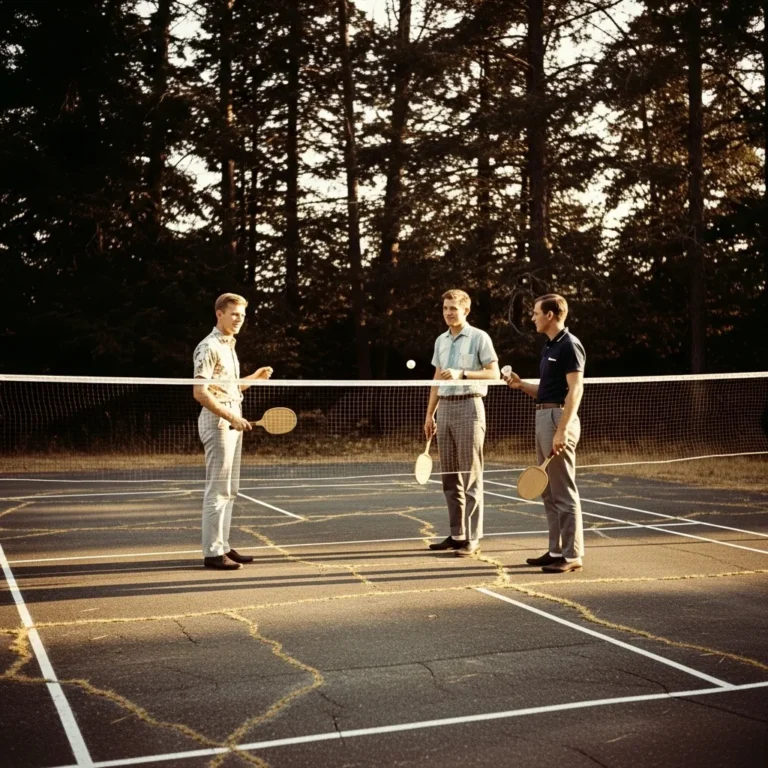
Paddle ball (specifically the one-wall variety) is significantly older. It evolved from handball in the early 1900s as players started using wooden paddles to save their hands. Pickleball was famously invented decades later, in 1965, on Bainbridge Island, Washington.
Does paddle ball have a “double bounce rule” like pickleball?
No, it does not. The double-bounce rule is a unique mechanic designed specifically for pickleball to prevent the serving team from rushing the net immediately. In one-wall paddleball, the ball must simply hit the wall before bouncing twice on the floor.
What happens to the bounce if you use a rubber paddle ball on a pickleball court?
If you attempt to play a net game on a pickleball court using a high-density rubber paddle ball, the game becomes dangerously fast. The rubber ball bounces significantly higher and travels at speeds that standard pickleball paddles are not designed to control safely, completely ruining the strategic “dinking” aspect of the game.
Is the grip size the same for a paddle ball racket and a pickleball paddle?
While they can be similar, pickleball paddles offer a much wider variety of highly specific grip circumferences (usually ranging from 4 to 4.5 inches) because precision wrist mechanics are crucial for adding spin to the plastic ball. Beach paddle ball grips are often thicker and less refined, as the main goal is simply a firm hold against the heavy impact of the rubber ball.
Conclusion
The paddle ball vs pickleball confusion is easy to understand, but once you look past the basic concept of hitting a ball with a paddle, they are worlds apart. Pickleball is a strategic, net-based game of finesse and positioning, while paddle ball is either a blazing-fast wall sport or a cooperative beach pastime. Both offer excellent ways to stay active, get outside, and improve your hand-eye coordination. We highly recommend grabbing the appropriate gear and giving both a try to see which community and playstyle fits you best!