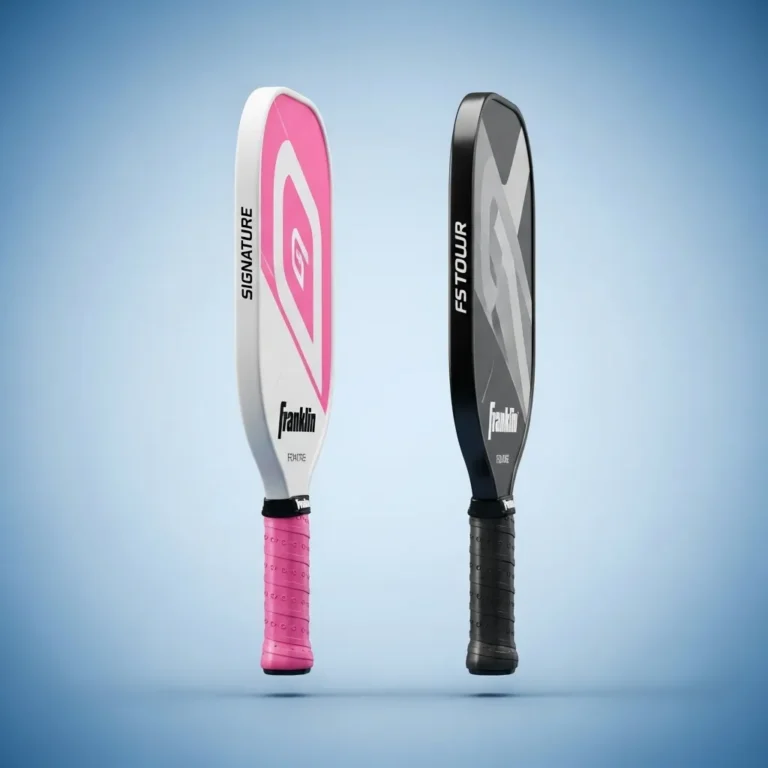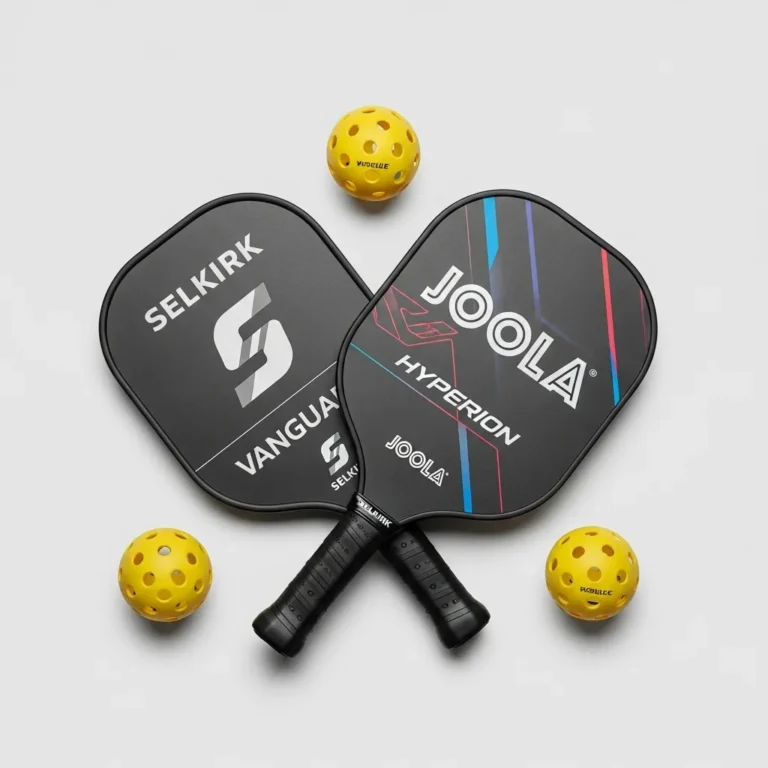

Stop blaming your technique for the dink that keeps sailing long. The culprit is often sitting in your hand: a pickleball paddle size that fights your reach, your wrist, and your swing instead of working with them. A paddle that’s half an inch too wide or a handle that’s one grip size off quietly taxes every shot, from the soft reset at the kitchen line to the drive you swing for the fence. The best players in the country didn’t just train harder; they fit their gear to their bodies down to the fraction of an inch. Here’s how to do the same, starting with the 24-inch rule that shapes every paddle on the market.
Pickleball Paddle Shape Profiles
Dimensions & aerodynamics · By combined total (max 24″)
Understanding pickleball paddle sizes: Anatomical Breakdown and Core Performance
The engineering core of modern pickleball paddle sizes centers upon a strict mathematical constraint often referred to as the “budget of inches.” To remain compliant with the USA Pickleball Equipment Standards Manual, the combined length and width of any paddle, including the edge guard and butt cap, must never exceed 24 inches (60.96 cm), and the maximum length is strictly capped at 17 inches. Every design choice made by a manufacturer involves stealing an inch from the width to give it to the length, or vice versa, creating entirely different kinetic profiles.
- The UPA-A 2025 Regulatory Shift: While USAP historically placed no limits on paddle thickness or weight, the newly introduced United Pickleball Association of America (UPA-A) standards have established strict caps for professional events. Under these new parameters, a paddle’s maximum thickness cannot exceed 24 mm (0.945 inches), and the total weight, including any modifications, must remain strictly under 10.0 ounces.
- Core Thickness Dynamics (12mm vs 14mm vs 16mm): Thickness drastically alters the Paddle/Ball Coefficient of Restitution (PBCoR). A 12mm core provides a rigid, highly responsive surface that minimizes dwell time, generating explosive pop for aggressive volleyers. Conversely, checking out the 14mm vs 16mm pickleball paddle debate reveals that a 16mm core allows the ball to compress deeper into the face, maximizing dwell time and surface friction to generate heavy topspin and controlled drops.
- Surface Roughness and Reflection: Beyond mere dimensions, surface texture is heavily monitored. USAP regulations dictate that paddles must not have indentations or textures that impart excessive spin beyond standardized limits. Additionally, the paddle face cannot exceed an 80 Gloss Unit (GU) reflection limit to prevent blinding glare during outdoor play.
Understanding these dimensional rules is essential before making a purchase. A common missing angle in equipment selection is failing to evaluate Swing Weight (rotational inertia) versus Twist Weight (torsional stability). An elongated paddle inherently possesses a higher swing weight, offering incredible plow-through power but sluggish hand speed at the net. For players trying to dial in their perfect setup, learning exactly how to pick a pickleball paddle involves balancing these two critical physics metrics against your own reaction times.
Check Best Pickleball Paddles for Intermediate Players
Navigating the pickleball paddle grip size chart: The Biomechanics of Comfort
Selecting the correct pickleball paddle grip size is arguably the most critical ergonomic decision a player can make. Grip size refers strictly to the circumference of the handle, not its length. When a grip is too small, the fingers excessively overlap the palm, forcing the player into a “death grip” to prevent the paddle from twisting upon impact. This constant muscular tension rapidly fatigues the forearm and limits wrist mobility. Conversely, a grip that is too large prevents the fingers from securing a locked hold, severely diminishing control on off-center strikes and muting tactile feedback.
The Ruler Test vs. Index Finger Fit
To accurately read a pickleball paddle grip size chart, players must utilize precise anatomical measurements. The primary clinical method is the Ruler Test. Open your dominant hand completely flat. Locate the bottom lateral crease in the center of your palm and measure vertically to the very tip of your ring finger. This measurement in inches translates directly to your ideal grip circumference. Alternatively, the Index Finger Test provides an on-court functional check: grip the paddle normally, then slide the index finger of your non-dominant hand into the gap between your fingertips and the heel of your palm. It should fit snugly without requiring force.
The Math of Overgrips and Handle Geometries
A vital detail often overlooked is the mathematical impact of adding an overgrip. Because the handle is roughly octagonal, adding a standard 0.6mm overgrip increases the total circumference by approximately 1/16 of an inch to 1/8 of an inch (a full grip size increment). Therefore, the golden rule of paddle fitting is: if you find yourself between two sizes, always purchase the smaller grip. You can meticulously build it up using pickleball grips and overgrips, whereas shaving down a handle that is too thick is virtually impossible without destroying the paddle’s structural integrity.
Furthermore, the geometry of the handle itself plays a massive role in proprioception. Paddles featuring elongated octagonal handles (resembling tennis racquets) allow players to physically feel the bevels, making it incredibly easy to switch seamlessly between Continental, Eastern, and Semi-Western grips without looking down. Newer silicone sleeve innovations like the Hesacore grip add thickness and vibration dampening, but they often round out these sharp bevels, trading precision index-referencing for sheer cushioning.
Pickleball Grip Size Guide
Player height to grip size · By recommended grip circumference
If you are meticulously tracking your pickleball paddle weight, remember that adding overgrips or silicone sleeves shifts the balance point of the paddle downward toward your hand. While this adds total static weight, it actually lowers the swing weight, making the paddle head feel lighter and faster during intense kitchen exchanges.
Head-to-Head: pickleball paddle size chart Dynamics (Elongated vs. Widebody)
When analyzing a pickleball paddle size chart, the most fiercely debated decision is choosing between an elongated profile and a standard widebody shape. These two form factors represent entirely different philosophies of court geometry and dictate how effectively a player can exploit standard pickleball court dimensions. Let’s break down the head-to-head performance metrics based on verified biomechanical data.
- Reach and Leverage (The Elongated Advantage): Elongated paddles (typically 16.5″ x 7.5″) maximize the 17-inch length limit. This pushes the sweet spot further away from the hand, creating a longer lever arm. The result is a massive increase in swing weight and kinetic energy upon impact, making elongated pickleball paddles the undisputed choice for singles players who rely on blistering baseline drives and aggressive passing shots. The tradeoff is a significantly narrower paddle face, meaning off-center strikes near the edge will drastically torque the paddle, punishing sloppy footwork.
- Stability and Sweet Spot (The Widebody Advantage): Widebody paddles (typically 16.0″ x 8.0″) utilize the “budget of inches” to stretch the face horizontally. This geometric widening vastly increases the twist weight (torsional stability) of the paddle. When a ball impacts near the outer edge during a lightning-fast volley exchange, a high twist weight prevents the paddle from rotating in your hand, keeping the ball on its intended trajectory. This makes the widebody the ultimate weapon for doubles specialists focused on resetting attacks and dominating the dink game.
- Handle Length Integration: Handle length eats directly into your paddle face budget. If you require a 5.5-inch to 6.0-inch handle to accommodate a two-handed backhand, you are inherently forced into either an elongated paddle with less surface area, or a specialized hybrid shape that attempts to balance the two. Players utilizing a one-handed backhand can opt for a 4.0-inch to 4.75-inch handle, allowing them to dedicate those extra inches to a massive, highly forgiving paddle face.
If you find that your chosen paddle size lacks stability or plow-through power, you can artificially alter its physics using perimeter weighting. Applying lead tape for pickleball paddles is perfectly legal under USAP Rule 2.E.5, provided it does not extend more than 0.5 inches inside the edge guard or 1.0 inch above the top of the grip. Placing tape at the 3 and 9 o’clock positions dramatically increases twist weight and expands the sweet spot without sacrificing hand speed, while placing it at the 12 o’clock position maximizes swing weight for aggressive power.
Frequently Asked Questions (FAQ)
What is the strict maximum length and width allowed for a paddle under USAP rules?
Under USA Pickleball standards, the combined total of the length and width cannot exceed 24 inches (60.96 cm), and the paddle’s overall length is hard-capped at 17 inches (43.18 cm). There are currently no restrictions on thickness for recreational play, though the UPA-A strictly limits thickness to 24mm for professional brackets in 2025.
Can I safely alter the factory grip size of my paddle to make it thicker or thinner?
Yes. Increasing the grip size is highly encouraged and easily achieved by wrapping 1/16-inch thick overgrips around the handle. However, reducing a factory grip’s size is highly difficult and usually requires stripping the handle down to its bare polymer or carbon core, which can severely compromise the paddle’s vibration dampening.
How does a longer handle impact the actual hitting surface of the paddle?
Because of the strict 24-inch combined limit, any length added to the handle is directly subtracted from the paddle’s hitting face. A longer handle (5.5 inches or more) provides the necessary leverage for a two-handed backhand but forces the sweet spot lower and reduces the total allowable surface area for blocking.