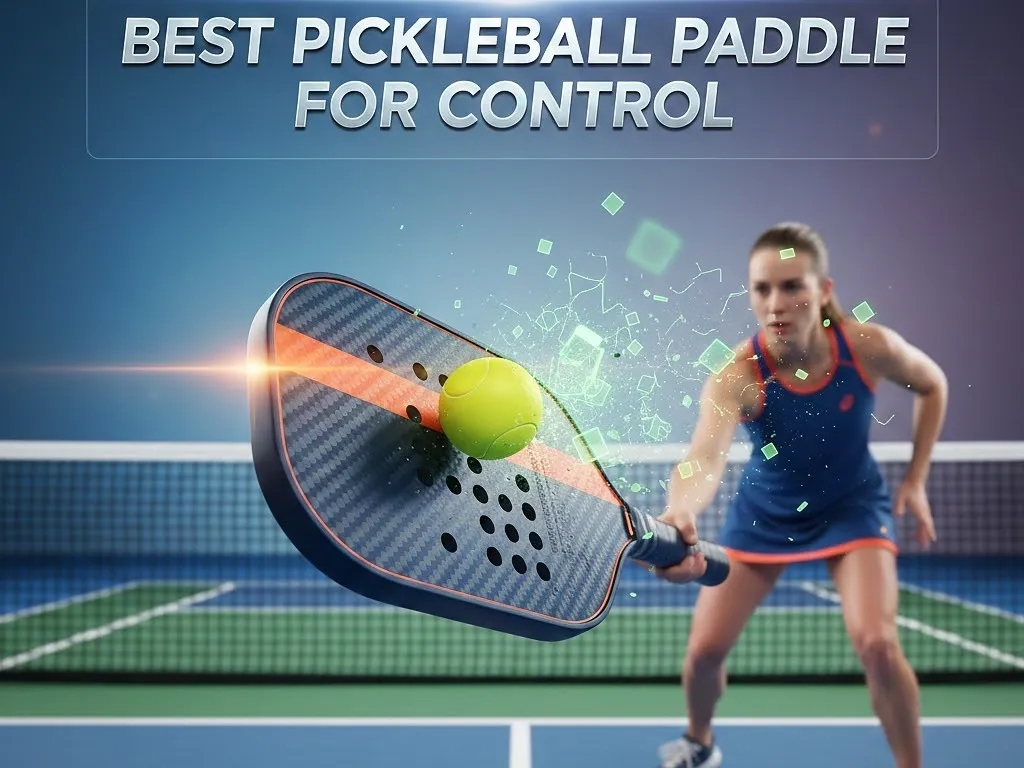
Imagine you are locked in a high-stakes dink rally. The ball is barely clearing the net, and your opponent is waiting for one slight mistake—a ball popped up just a fraction too high. In this moment, your equipment is the only thing between a winning reset and a lost point. Finding the best pickleball paddle for control is not just about slowing down the game; it is about gaining the surgical precision needed to dictate every rally.
As the sport evolves in 2026, the demand for high-performance gear has skyrocketed. Players are no longer satisfied with just “soft” paddles; they want a sophisticated balance. Whether you are looking for the best pickleball paddles for control to master your third-shot drops or seeking the best pickleball paddles for power and control to dominate from the baseline, this guide explores the engineering and physics behind the top-rated gear on the market today.
The Core Dilemma: Decoding Control, Power, and “Pop”
In the world of pickleball, “control” is often misunderstood as simply a lack of power. However, true control refers to dwell time—how long the ball stays on the paddle face—and vibration dampening. When you use the best pickleball paddle for control, the paddle absorbs the energy of the incoming ball, allowing you to “feel” the shot and place it exactly where you want.
- Control: Focuses on touch, resets, and dinking. Usually achieved with thicker cores (16mm).
- Power: Focuses on exit velocity. Ideal for drives and overhead slams. Check out how to play power pickleball to see how gear affects strategy.
- Pop: The “trampoline effect” on soft shots. Too much pop can make dinking difficult, while too little can make it hard to put the ball away.
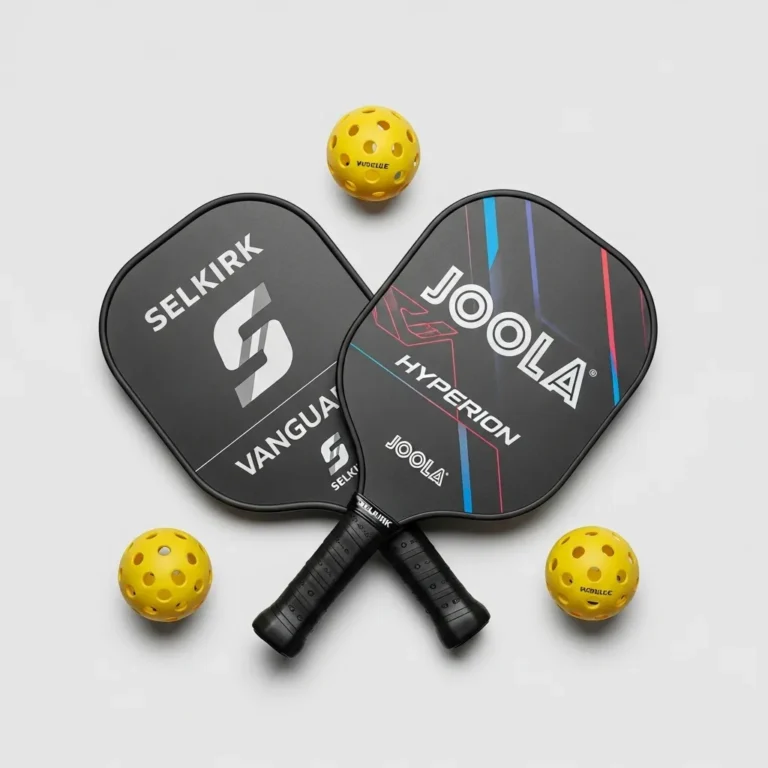
Finding the best pickleball paddles for power and control requires looking for “all-court” paddles. Brands like Joola with their Gen 3 Perseus and Selkirk with the Vanguard Control series have mastered this by using thermoformed edges and specialized foam perimeters to maintain stability without sacrificing “thump.”
The Anatomy of a Control Paddle: Key Specifications
To choose the best pickleball paddle for control, you must look under the hood. The materials and dimensions determine how the paddle reacts to the ball.
Core Thickness: The 16mm Standard
If control is your priority, a 16mm core is almost always the answer. Thicker cores are softer and more forgiving. They dissipate energy, which helps in “resetting” a hard drive into a soft dink. In contrast, 13mm cores are thinner and stiffer, providing more “feedback” but less forgiveness.
Face Material: The Rise of Raw Carbon Fiber
The best pickleball paddle for spin and control almost exclusively uses T700 carbon fiber pickleball paddle technology. This material provides a friction-rich surface that “grabs” the ball. For players who prioritize touch, the Selkirk Luxx Control paddle uses a unique proprietary carbon weave that feels incredibly plush at the kitchen line.
Mastering the Game: The Role of Spin in Control
Spin is the “secret sauce” of modern control. By generating heavy topspin, you can hit the ball harder and higher over the net, knowing the friction will pull it back down into the court. This is why the search for the best pickleball paddle for spin and control is so popular among intermediate and advanced players.
High-end models like the CRBN 1X Power Series or the Vatic Pro Prism Flash utilize “Raw” surfaces that aren’t just sprayed on but are part of the carbon weave. This ensures that your spin capabilities don’t disappear after a few months of heavy play. When you control the rotation of the ball, you control the pace of the game.
Expanding the Horizon: Power and Control Hybrids
For the competitive player, the best pickleball paddle for power and control is the “Holy Grail.” You need the power to finish points and the control to survive the transition zone. Models like the Gearbox Pro Control have revolutionized this category by using a “coreless” carbon fiber structure that provides massive power on drives but maintains a soft feel on dinks due to its high-tech composition.
Other notable mentions in the best pickleball paddles for power and control category include:
- Joola Ben Johns Perseus: Exceptional stability and a large sweet spot.
- Selkirk Vanguard Control: Specifically designed for those who want the Luxx feel with a bit more traditional paddle shape.
- Vatic Pro: Offering premium performance at a mid-tier price point, making it one of the best beginner pickleball paddles for those moving into competitive play.
How to Match the Paddle to Your Playstyle
Before buying, you must understand your pickleball skill levels. A beginner may struggle with a heavy power paddle, while a pro might find a pure control paddle too “pillowy.”
- The Defensive Specialist: Focus on 16mm paddles with a wide-body shape for maximum forgiveness.
- The Aggressive All-Courter: Look for hybrid shapes (elongated with rounded corners) that offer a 14mm or 16mm core with thermoforming.
- The Spin Wizard: Prioritize “Raw Carbon” faces and check the USA Pickleball Approved Paddle List to ensure your grit levels are tournament legal.
Don’t forget that the pickleball kitchen rules often dictate the equipment. Since most points are won at the net, a paddle that excels in “hand speed” (low swing weight) while maintaining control is vital.
Frequently Asked Questions (FAQ)
1. What does “control” actually mean in a pickleball paddle?
Control refers to a paddle’s ability to absorb energy and provide a predictable response. It is measured by dwell time (how long the ball stays on the face) and the size of the sweet spot. The best pickleball paddle for control allows you to execute “soft” shots like dinks and resets with high consistency.
2. Can a paddle truly offer both power and control?
Yes. Modern “All-Court” paddles use technologies like thermoforming (heating the paddle to create a solid edges) and foam-injected perimeters. This allows a paddle to be stiff enough for power but dampen vibrations enough for control. Brands like Joola and Six Zero are leaders in this category.
3. How does core thickness (13mm vs 16mm) impact my game?
A 16mm core is thicker and better for control because it absorbs more shock. A 13mm core is thinner, making the paddle “poppier” and faster, which is great for power but requires much softer hands to control dinks at the pickleball kitchen.
4. How long does the spin texture last on a control paddle?
On high-quality carbon fiber pickleball paddles, the “grit” is part of the raw fiber weave and can last 6-12 months of regular play. Cheaper paddles with “spray-on” grit may lose their spin capabilities in just a few weeks.
5. Should beginners use a control paddle?
Absolutely. Most instructors recommend starting with the best beginner pickleball paddles that prioritize control. Learning to place the ball accurately is more important than hitting it hard when you are first starting out.
Conclusion: Finding Your Perfect Match
Choosing the best pickleball paddle for control is a personal journey. Whether you lean towards the plush feel of a Selkirk Luxx or the balanced aggression of a Joola Perseus, the goal remains the same: confidence. When you trust your paddle to place the ball exactly where you intend, your game reaches a new level of maturity.
Remember to always check if your chosen gear is on the USA Pickleball Approved Paddle List before entering a tournament. With the right mix of power, control, and spin, you’ll be the player everyone fears at the kitchen line.