Your expensive carbon fiber paddle might just be an expensive paperweight at your next tournament. The governing body has dropped the hammer, and the usa pickleball power paddle ban is actively reshaping the landscape of local courts and national brackets alike. It is no longer just about the controversial “Gen 3” launch window; a shifting framework of deflection testing and surface roughness standards has quietly blacklisted some of the market’s top-selling gear. If you are tracking the usa pickleball power paddles ban update to ensure your setup remains fully compliant, skipping the latest compliance roster is a fast track to an automatic disqualification.
USAP Banned & Reinstated Paddles
PBCoR Delisting & Reinstatement · Verified 2025
To navigate the complications of the usa pickleball power paddle ban, tournament players should immediately switch to fully approved, high-performance equipment that offers an optimal blend of speed and precise control. Investing in officially certified gear guarantees tournament eligibility while providing alternative thermoformed pop without violating strict compliance standards. For the safest and most efficient transition, checking the comprehensive usa pickleball approved paddle list remains the single best course of action to secure sanctioned playability.
The Structural Catalyst: Why the USA Pickleball Power Paddle Ban Happened
The core of the usa pickleball power paddle ban lies in a massive technical shift regarding ball exit velocity and mechanical trampline effects. For years, manufacturers pushed the absolute limit of design by engineering an advanced carbon fiber pickleball paddle that utilized thermoforming techniques, perimeter foam injections, and unbonded core walls. These innovations created an unprecedented power metric known as the coefficient of restitution (CoR).
As elite players began hitting drives exceeding 60 mph, the reaction window at the non-volley zone line—familiarly known as the Kitchen—shrank to sub-millisecond thresholds. USA Pickleball observed a distinct change in player behavior: reckless bangers were completely dominating strategic tactical players who relied on soft dinks. The athletic game was rapidly transitioning away from chess-like dink rallies into a dangerous baseline-driven power exhibition, risking structural injury to participants and threatening the core identity of the sport.
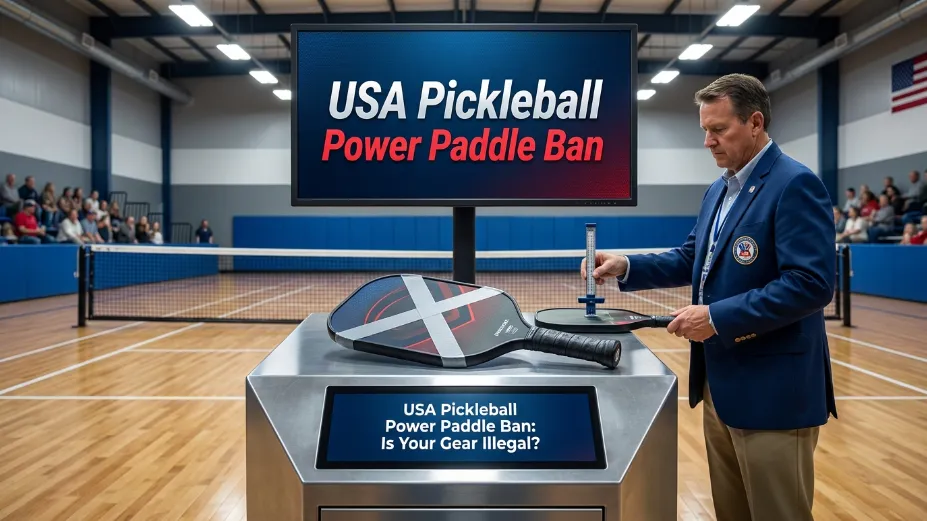
To re-establish behavioral equilibrium, the regulatory board implemented a strict laboratory apparatus to evaluate dynamic deflection. When a paddle exhibits excessive face compression under specific loads, it stores energy and acts like a launching pad. The controversial “Gen 3” launch window accelerated this crisis, leading to the creation of the List of illegal pickleball paddles USA. These rigid enforcement mechanisms are designed to protect defensive resets, ensuring that player skill, rather than mechanical trampoline assistance, dictates the outcome of championship points.
Usa Pickleball Power Paddles Ban Update: The Core Mechanics of Deflection Testing
A deep look into the latest usa pickleball power paddles ban update reveals an intricate laboratory protocol engineered to detect microscopic structural deviations. USA Pickleball, in collaboration with independent engineering facilities, introduced the Power Ball Coefficient of Restitution (PBCoR) metric. Unlike older legacy tests that merely measured surface grit or static stiffness, the contemporary PBCoR standard evaluates the dynamic energy returned to the ball upon high-velocity impact.
The technical parameters of this update focus heavily on three major testing methodologies:
- Dynamic Deflection Mapping: A calibrated pneumatic piston fires a standard pickleball at multiple designated matrix points across the paddle face to measure localized compressibility.
- Surface Coefficient of Friction (Grit Integrity): Electronic profilometers scan the face to ensure roughness does not create spin numbers that exceed baseline physics restrictions.
- Core Compaction Analysis: X-ray scanning verifies that internal honeycomb structures have not been deliberately crushed or chemically modified to act as internal springs.
The implementation of these rigorous checks has created a strict environment for premium gear. Any manufacturer trying to circumvent these thresholds through creative engineering faces immediate product delisting. This systematic approach ensures that any model found on the official court has passed rigorous laboratory validation, preventing non-compliant equipment from undermining sanctioned tournament draws.
Banned Pickleball Paddles 2026: The Definite Analysis of Blacklisted Gear
The comprehensive ledger of Banned Pickleball paddles 2026 stands as a critical reference point for competitive players across the United States. The permanent elimination of several highly sought-after paddles shows that regulators are completely unyielding in their enforcement. Prominent among the delisted equipment are the JOOLA Mod TA-15 series and the Gearbox Pro Power models, both of which redefined power thresholds before being officially banned from sanctioned brackets.
Understanding why specific models failed tells a compelling story of cutting-edge materials hitting regulatory walls:
- JOOLA Perseus 14mm & 16mm Mod TA-15: These models incorporated a specialized internal propulsion core. While they offered unmatched power, their advanced core structures failed the long-term deflection standard after undergoing extensive field wear, leading to an official sunset on July 1, 2025.
- Gearbox Pro Power Elongated: Utilizing a unique solid-span carbon construction, this model generated exceptional ball speeds. However, its specialized mechanical deflection properties consistently exceeded the maximum PBCoR limits during random tournament testing.
- ProKennex Black Ace Series (Pro, Ovation, XF): Famous for their kinetic energy bead chambers designed to mitigate tennis elbow, these models crossed the regulatory line due to complex face flexing behaviors that generated illegal trampline effects.
This widespread delisting has disrupted local club dynamics and forced competitive brackets to enforce strict pre-match paddle inspections. Players who continue to show up with these blacklisted models face instant disqualification, turning what was once a premium $275 investment into an unusable asset for competitive tournament networks.
List of Illegal Pickleball Paddles USA: Tracking Brand Infractions and Core Technologies
Navigating the official List of illegal pickleball paddles USA requires a clear understanding of the specific engineering infractions that prompt regulatory intervention. USA Pickleball does not ban a brand out of bias; instead, it enforces precise physical metrics against advanced engineering designs that compromise the balance between power and control on the court.
The primary engineering infractions leading to paddle bans include:
- Delamination and Core Crushing: Thermoformed paddles feature outer edges sealed with heavy resin. Over hours of play, the internal polypropylene honeycomb core can break away from the carbon face. This creates an unregulated internal void that produces massive trampoline pop.
- Progressive Surface Degradation: Many high-end models utilize peel-ply carbon textures or raw carbon weaves. While initially legal, some manufacturing runs experience rapid resin breakdown, exposing raw fibers that create illegal friction levels for unnatural spin generation.
- Unregulated Multi-Layer Overlays: Applying multiple carbon sheets with varying resin densities can cause the center of the paddle to act as a flexible diaphragm, which safely passes static tests but delivers illegal power under dynamic impacts.
Because of these technical challenges, checking the official USA Pickleball Approved Paddle List is absolutely vital before purchasing any second-hand or older premium model. Brand compliance teams are now forced to rebuild their entire production lines from scratch, shifting focus away from absolute power toward legal, optimized sweet spots.
Head to Head: The Compliance Showdown
To fully grasp the current regulatory environment, we must evaluate how prominent manufacturers responded to these unprecedented testing challenges. The divergence in engineering strategies between major industry leaders highlights the difficulty of maintaining high performance within strict legal limits.
JOOLA Gen 3 / Mod TA-15 vs. Gearbox PRO Ultimate Line
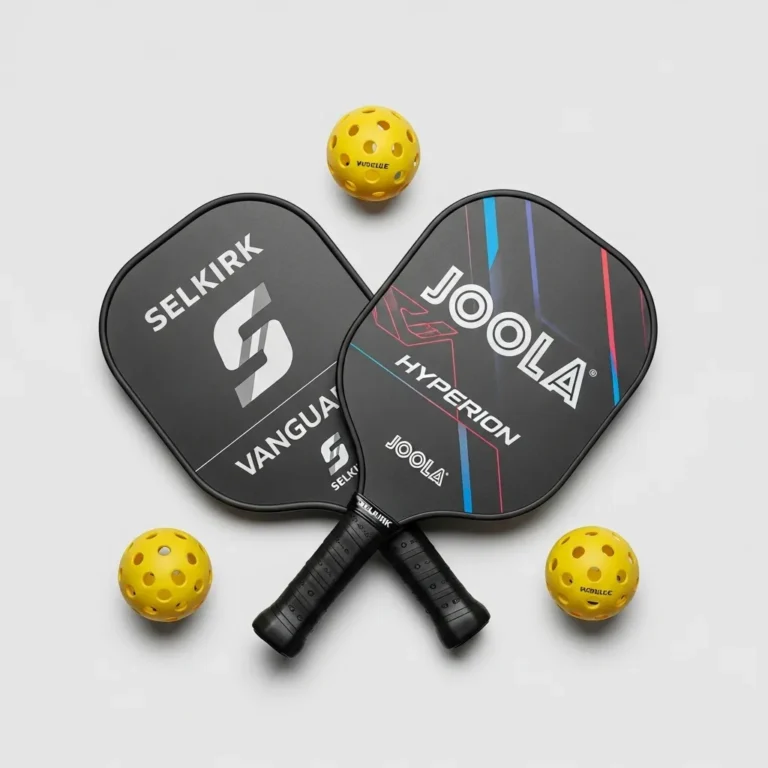
When the usa pickleball power paddle ban struck, JOOLA experienced significant disruption. The Mod TA-15 models were celebrated for their plush feel and sudden explosive acceleration. However, the advanced engineering that made a joola pickleball paddle so lethal also contributed to its downfall, as its internal core structure could not maintain stable deflection numbers over extended periods of heavy use. In response, JOOLA completely shifted focus, engineering newer compliant lines that rely on advanced material layering rather than dynamic core mechanics to provide control-focused players with reliable, tournament-legal gear.
Conversely, the engineering team at gearbox pickleball chose a completely different technological path. Following the delisting of the Pro Power series, Gearbox utilized their proprietary solid-carbon frame knowledge to construct the new PRO Ultimate line. Instead of relying on a hollow or semi-hollow structure that risks delamination, the PRO Ultimate line uses tightly compressed, high-modulus carbon plies woven together. This architectural approach delivers incredible ball speed and clean power while ensuring the face remains completely rigid, satisfying the strict requirements of the updated PBCoR test framework.
The Competitor Gaps: What Other Outlets Fail to Tell You
Most standard pickleball review sites and mainstream media blogs only cover the surface of the equipment ban, focusing purely on brand drama and frustrated player complaints. They completely fail to analyze the underlying material science and legal complexities that are secretly shaping the future of paddle manufacturing.
The first critical gap is the reality of micro-delamination. A paddle might feel perfectly legal during an initial unboxing, but after twenty hours of heavy baseline drives, the internal adhesive bonds can degrade. This creates a temporary, hidden trampoline effect that can easily fail a random mid-tournament check, even if the model itself is technically approved. Competitors never warn recreational players that their aging “legal” paddle might actually be an illegal setup in disguise.
The second major omission is the concept of atmospheric variance on thermoformed materials. High ambient temperatures combined with direct sunlight can soften the internal polypropylene cores of certain budget thermoformed paddles. This temporary softening alters the dynamic deflection rate, causing a paddle that passed compliance checks in cool morning conditions to fail a test during a scorching afternoon semi-final. Understanding these material behaviors is what separates elite tournament preparation from unexpected technical disqualifications.
Navigating Legal Alternatives: The Top Fully Compliant Choices
Replacing a banned model does not mean you have to abandon an aggressive court strategy. The industry has quickly adapted by releasing an array of high-performing, fully certified options that provide exceptional ball speed without compromising compliance status.
When searching for the market’s top pickleball paddles, players should prioritize models engineered with stable, multi-phase cold molding or reinforced thermoforming configurations. These advanced designs utilize localized perimeter stability weights instead of relying on flexible face zones. This allows aggressive players to generate heavy spin and driving depth through pure body mechanics and clean sweet-spot contact, remaining fully compliant with all tournament regulations while preserving their competitive edge on the court.
Frequently Asked Questions — Paddle Compliance & Regulations
1. Can I legally use a banned paddle for casual, non-tournament recreational play?
Yes. USA Pickleball regulations only apply to sanctioned tournaments, organized leagues, and official club events. However, using a delisted paddle during local club matches is highly discouraged, as it can create an unfair advantage and disrupt your muscle memory for competitive environments.
2. How do I instantly check if my paddle has been added to the illegal list?
You should directly visit the official, searchable database maintained on the website. Manufacturers update this ledger immediately whenever a production batch experiences a compliance issue or an official design is altered.
3. What exactly is paddle delamination, and does it happen to all carbon fiber models?
Delamination occurs when the internal honeycomb core detaches from the outer face sheets, creating an internal air pocket that acts like a spring. While it primarily affects thermoformed models due to high pressure and heat during manufacturing, cold-molded paddles can also experience it after long-term wear.
4. What happens if a tournament director catches me using a delisted paddle?
If you are caught using a non-compliant model during an active match, you will face an immediate, non-appealable technical forfeiture of that match. Repeated offenses across a single event can lead to a full event disqualification and potential suspension from future sanctioned brackets.
5. Are older wooden or basic composite paddles affected by this modern power ban?
No. The current ban specifically targets advanced premium power paddles that exceed the newly established PBCoR deflection limits. Vintage wooden models and basic entry-level composite gear do not possess the material technology required to generate illegal trampoline effects.