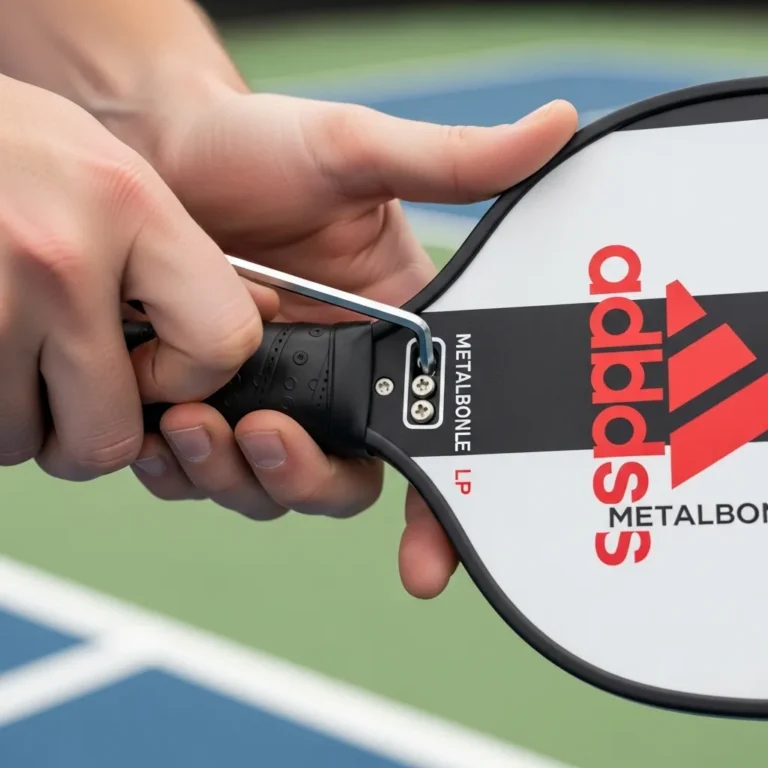
If you have turned on a professional pickleball stream anytime in the last two years, you have seen the “Ben Johns Effect.” The world’s number one player dominates the court, and naturally, everyone wants to know what equipment he is using. However, when you finally decide to upgrade your gear and search for the joola ben johns hyperion pickleball paddle, you are immediately hit with a wall of confusing acronyms.
CFS, CAS, C2, Swift, Perseus, 16mm, 14mm—it is enough to make your head spin before you even step on the court. Joola has flooded the market with variations of this paddle, and making the wrong choice could cost you over $200 and leave you with a paddle that doesn’t fit your game.
This isn’t just a spec sheet recitation. In this guide, we are going to dive deep into the brutally honest truth about the Hyperion series. We will cover the hidden flaws (like the notorious swing weight), the “death rattle” quality control issues, and definitively answer whether the joola ben johns hyperion cfs 16 pickleball paddle is still the king of the court in 2026.
The Core Confusion: Hyperion CFS vs. CAS (Don’t Buy the Wrong One)
The biggest mistake buyers make is confusing the joola ben johns hyperion cfs 16 pickleball paddle with the cheaper CAS model. They look almost identical on the shelf, but they perform like two completely different animals.
1. CFS (Carbon Friction Surface)
The “CFS” stands for Carbon Friction Surface. This is the premium technology that put Joola on the map. It utilizes a “Peel-Ply” carbon fiber texture. Instead of spraying grit onto the paddle (which eventually wears off), the texture is imprinted into the carbon fiber sheet itself during the manufacturing process.
The Feel: The CFS 16 is known for being plush and soft. When you hit the ball, it feels like the paddle “catches” or dwells on the face for a split second longer. This dwell time allows you to shape your shots, adding massive topspin to drives and keeping dinks unattackable.
2. CAS (Carbon Abrasion Surface)
The joola ben johns hyperion cas 16 pickleball paddle is the budget-friendly sibling. “CAS” stands for Carbon Abrasion Surface. This is essentially a sand-blasted texture applied to the surface. While it feels very gritty to the touch when brand new (like sandpaper), many users report that it smoothes out faster than the CFS.
The Feel: The CAS is crisper and stiffer. It doesn’t have that soft, “marshmallow” feel of the CFS. It plays more like a traditional polymer core paddle—poppy and responsive, but with less access to spin. If you are looking for that specific “pro” feel associated with a high-end Joola pickleball paddle, the CAS might leave you disappointed.
The Verdict on Surfaces
If you are a 3.5+ level player looking to develop a soft game and heavy spin, the CFS is worth the extra investment. The CAS is a fine entry-level paddle, but it lacks the dynamic range of the CFS.
The “Elephant in the Room”: Swing Weight & Head Heaviness
If you search for joola ben johns hyperion cfs 16 pickleball paddle reviews on Reddit or Discord, you will find one complaint repeated ad nauseam: “It feels like a brick.”
This is the most critical factor to understand before buying. The Hyperion CFS 16 is notoriously head-heavy.
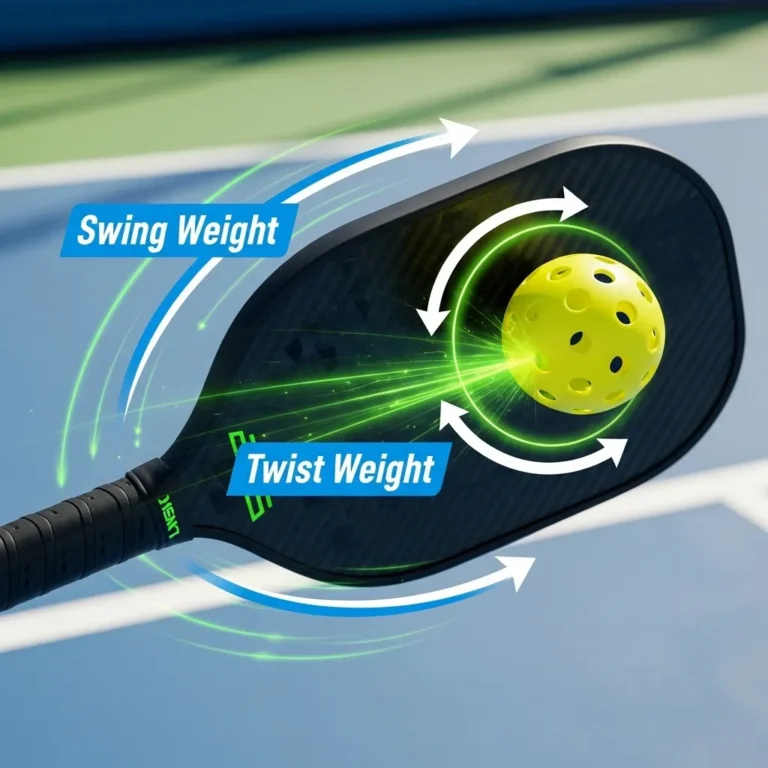
Static Weight vs. Swing Weight
- Static Weight: The paddle usually weighs in around 8.4oz to 8.5oz. This is on the heavier side, but not unmanageable for most.
- Swing Weight: This is how heavy the paddle feels when you are swinging it through the air. Because the Hyperion has an elongated shape and extra foam injected into the perimeter (the Hyperfoam Edge Wall), the weight is distributed toward the top of the paddle.
This high swing weight (often measuring over 120) means the paddle has incredible “plow-through.” When you block a hard drive from an opponent, the paddle doesn’t twist in your hand. It is stable as a rock. However, the trade-off is hand speed.
Who This Hurts: If you rely on lightning-fast hands at the kitchen line for volley battles, or if you suffer from tennis elbow or weak wrists, the standard Hyperion CFS 16 might be too sluggish for you. You might find yourself late on punch volleys.
Who This Helps: Singles players and players who drive the ball from the baseline love this weight. It adds natural power to your groundstrokes without you having to swing harder.
This weight distribution is a characteristic of almost every high-performance carbon fiber pickleball paddle that utilizes edge-foam technology, but the Hyperion is the most extreme example of it.
16mm vs 14mm: Which Spec Fits Your Game?
Once you have decided on the CFS model, you have to choose your core thickness. Are you getting the joola ben john’s hyperion cfs 16mm pro pickleball paddle or the thinner 14mm version?
The Case for 16mm (Ben’s Choice)
The 16mm core is the standard for a reason. Thicker cores absorb more energy from the ball.
- Control: It is easier to reset a hard drive into the kitchen.
- Sweet Spot: The 16mm has a larger, more forgiving sweet spot.
- Stability: It twists less on off-center hits.
This is generally the best choice for 90% of amateur players. It provides the forgiveness you need when you aren’t hitting the center of the paddle perfectly every time. It is the configuration most associated with the Ben Johns pickleball paddle preference for controlled, calculated play.
The Case for 14mm (The Power Option)
The 14mm core is stiffer and returns more energy to the ball.
- Pop: The ball flies off the face faster.
- Feedback: You feel the ball more, but you also feel the vibrations more.
- Hand Speed: The 14mm version is slightly lighter and moves through the air faster than the 16mm.
Choose the 14mm only if you struggle to put away shots and need that extra “pop” to finish points, or if you find the 16mm too heavy.
Critical Durability & Quality Control (The “Rattle”)
We cannot write an honest review without addressing the quality control issues that have plagued this line. While Joola has improved significantly in later batches, you need to be aware of two main issues.
1. The “Death Rattle”
A common issue reported by users is a rattling sound developing inside the paddle after 3-4 months of heavy play. This is usually caused by a piece of glue or core material breaking loose inside the honeycomb structure. While it often doesn’t affect the playability, it is annoying. If you buy new, Joola’s warranty covers this, but it is a hassle to deal with.
2. The White Grip Nightmare
The Hyperion comes with a signature white grip. It looks stunning in marketing photos. In reality, it turns gray and brown after one intense session. Furthermore, the stock grip can be a bit slick when sweaty.
Pro Tip: Do not let the grip color deter you. Almost all serious players replace their stock grip or add an overgrip immediately. We recommend picking up some tacky pickleball grips (preferably in black or a dark color) to put over the handle as soon as you unbox it.
Comparisons & Alternatives
The Hyperion isn’t the only shark in the ocean anymore. How does it stack up against its main rival?
Joola Hyperion vs. Selkirk Vanguard
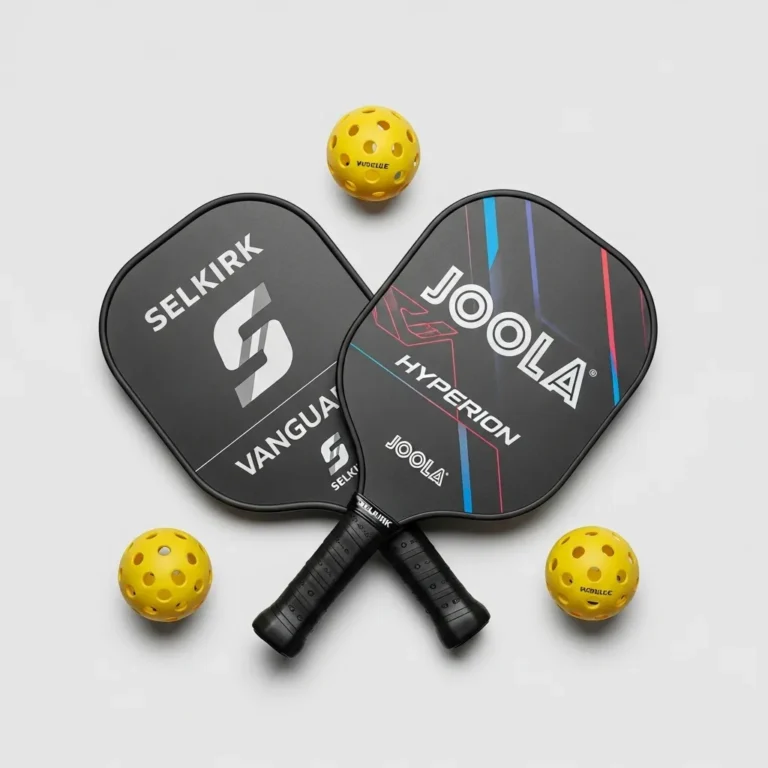
This is the classic “Chevy vs. Ford” debate of pickleball. The Selkirk Vanguard Power Air is known for its edgeless design and incredible aerodynamics—it swings much faster than the Hyperion. However, the Hyperion CFS offers significantly better spin and a softer feel on resets.
If you want to read a full breakdown of this rivalry, check out our guide on the Selkirk Vanguard vs Joola Hyperion.
Frequently Asked Questions (FAQ)
Here are the specific, niche questions that players are asking on forums, filtered to give you the most relevant answers.
Q: Can I add lead tape to the Hyperion CFS 16?
A: You can, but proceed with extreme caution. Because the paddle is already head-heavy, adding lead tape to the top (10 or 2 o’clock positions) will make it extremely difficult to swing quickly. If you want to expand the sweet spot, try adding small amounts of weight to the throat area (near the handle) to maintain maneuverability.
Q: Is the Joola Hyperion “Swift” version better?
A: The “Swift” version was Joola’s answer to the weight complaints. It is lighter, but many users reported that the Swift version felt less solid and, in some early batches, had durability issues near the handle neck. The standard CFS 16 remains the safer, more durable choice.
Q: Does the grit wear off quickly on the CFS?
A: The peel-ply texture on the CFS lasts significantly longer than spray-on grit textures. However, all paddles lose spin over time. You can expect peak spin performance for about 6 months of heavy play. Ensure your paddle is USA Pickleball Approved if you plan on playing in sanctioned tournaments.
Q: Is the “Aero-Curve” head shape actually functional?
A: Joola claims the curved head reduces drag. While it looks aerodynamic, the heavy swing weight negates much of this benefit. The curve mainly serves to give the paddle a unique look and slightly reduce the surface area at the very tip, which can help slightly with hand speed, but not enough to make it feel “light.”
Conclusion: The Final Verdict
So, is the joola ben johns hyperion pickleball paddle still worth it?
Buy the Hyperion CFS 16 if:
- You want the maximum possible spin capability.
- You play a controlled game and need help resetting hard drives (thanks to the 16mm core).
- You are strong enough to handle a heavier paddle and want stability on your blocks.
Skip it if:
- You have any history of tennis elbow (the weight/vibration can aggravate it).
- You prefer a lightweight, “whippy” paddle for fast hand battles.
- You are on a tight budget (the CAS is cheaper, but there are better value paddles from other brands in that price range).
The Hyperion remains a legendary paddle that changed the geometry of the sport. While newer models like the Perseus have since been released, the original Hyperion CFS 16 offers a plush, dwell-heavy feel that many players still prefer over the stiffer, newer generation paddles.
You May Also Like