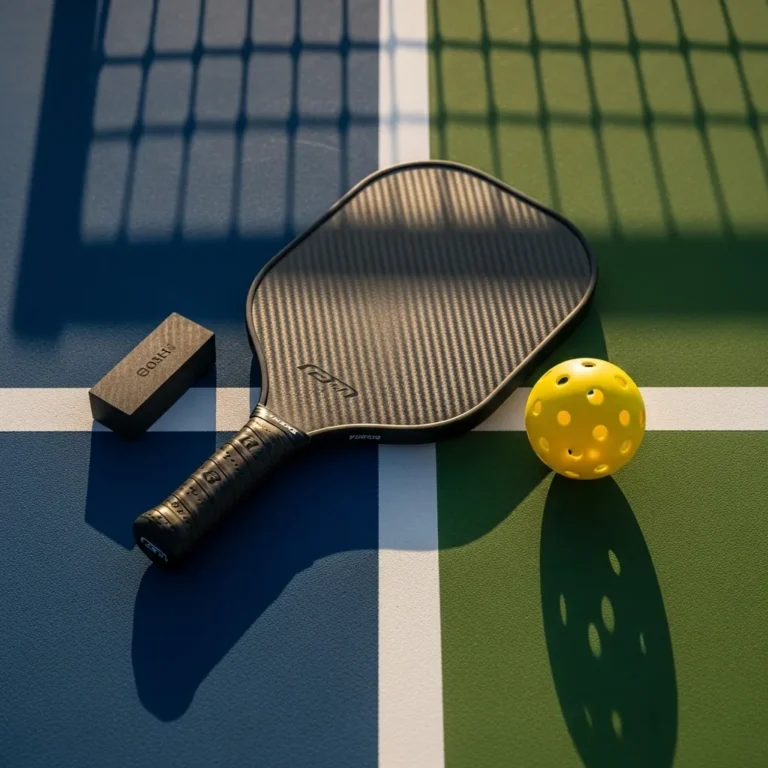
You’ve seen them on the courts. The matte black surfaces, the gritty textures, and the satisfying “thud” as the ball resets perfectly into the kitchen. The rise of the carbon fiber pickleball paddle has completely shifted the landscape of the sport, moving us away from the “pop-heavy” era into an age of precision and spin.
But here is the problem: the market is flooded with buzzwords. Terms like “Raw,” “T700,” “3K Weave,” and “Composite” are thrown around loosely. If you are trying to figure out how to pick a pickleball paddle that actually suits your game, the confusion is real. Is the upgrade worth the price tag, or is it just marketing hype?
In this guide, we are going deep. We will strip away the marketing fluff to explain exactly what carbon fiber technology does for your game, how to maintain that gritty surface, and why the best carbon fiber pickleball paddle might just be the missing link between you and your next rating bump.
What Exactly is a Carbon Fiber Paddle? (The Tech Specs)
To understand the performance, you have to understand the construction. A pickleball paddle carbon fiber face is made by weaving thin strands of carbon atoms together. This material is renowned in aerospace and automotive industries for being incredibly stiff, lightweight, and temperature resistant. In pickleball, this translates to durability and a very specific feel.
The “Raw” Revolution: It’s Not Just a Name
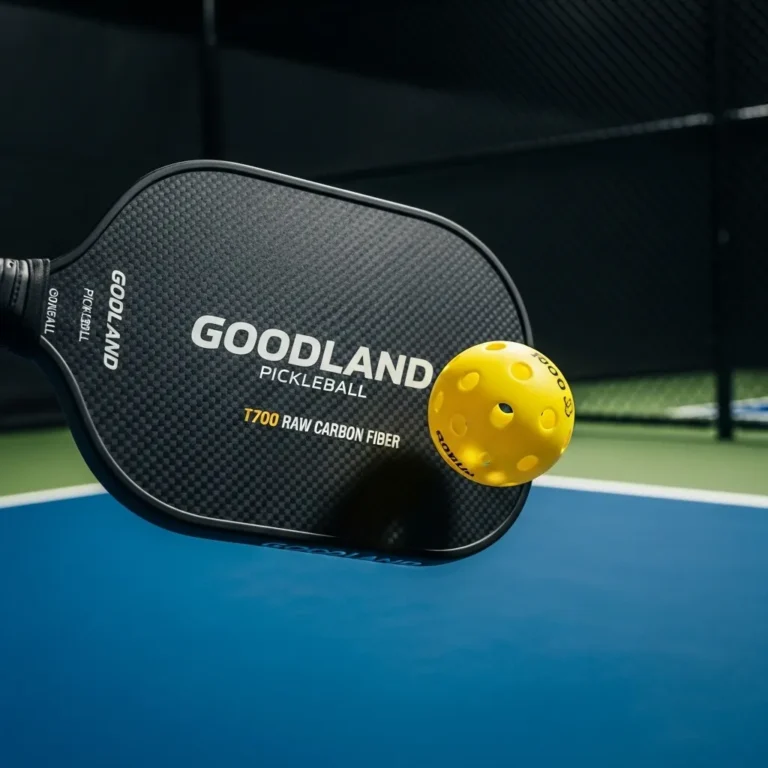
You will often see the term “Raw Carbon Fiber.” This is a crucial distinction. In older or cheaper paddles, manufacturers would spray a gritty texture on top of a smooth surface. Over time, this spray wears off, and your spin potential vanishes.
With a true carbon fiber pickleball paddle utilizing “Raw” technology, the texture comes from the actual carbon fabric itself, often combined with a peel-ply texture during the curing process. This means the grit is integral to the paddle, not just painted on.
Speaking of this technology, one brand stands out as the pioneer. If you are looking for the most famous carbon fiber paddle, read our comprehensive review of the CRBN Pickleball Paddle.
Decoding the Specs: T700 vs. The Rest
If you browse forums like Reddit, you will see players obsessing over “T700.” Here is the breakdown:
- Generic Carbon: Standard carbon fiber is strong, but variations exist in tensile strength.
- T700 (Toray): This is a specific grade of carbon fiber manufactured by Toray. It is known for higher tensile strength and stiffness compared to standard T300 options. Does it matter? Yes. A stiffer face absorbs more energy, resulting in a “softer” feel that is incredible for control.
Weave Patterns: 3K vs. 12K vs. 18K
You might see specs listing 3K, 12K, or 18K weaves. This refers to the number of filaments in a “tow” (the bundle of fibers). While 18K looks aesthetically pleasing with a wider weave, for the average player, the performance difference between 3K and 18K is minimal compared to the quality of the resin and the core thickness. Don’t get too hung up on the “K” number; focus on the “Raw” aspect.
Performance: How It Feels on the Court
Why are carbon fiber pickleball paddles taking over the podiums? It comes down to three factors: Dwell Time, Spin, and the Reset.
Control vs. Power
There is a misconception that carbon fiber equals power. In reality, carbon fiber is a control material. Because the fibers are stiff, they spread the energy of the ball impact across the face. This creates a large sweet spot but absorbs some of the “pop.” If you are a player who loves the soft game and mastering the pickleball dink, carbon fiber is your best friend.
The Spin Factor
The friction created by raw carbon fiber is unmatched. This allows you to “shape” the ball. When you brush up on a drive or cut a return, the paddle grabs the ball for a split second longer (Dwell Time), imparting massive RPMs (Revolutions Per Minute).
Core Thickness Synergy
The magic happens when you pair a carbon face with a thick core.
- 13mm Core + Carbon: You get spin, but with more pop/power. Good for aggressive players.
- 16mm Core + Carbon: The ultimate control setup. The thick core dampens vibration, and the carbon face grabs the ball. This is the standard for high-level play.
Many top-tier paddles, such as the Six Zero pickleball line or the Double Black Diamond pickleball paddle, utilize this 16mm/Carbon combination to dominate the market.
Carbon Fiber vs. The Rest
How does it stack up against other materials? Let’s settle the debate.
Carbon Fiber vs. Fiberglass
Fiberglass (Composite): This material is softer and more flexible. When the ball hits, the face “trampolines,” shooting the ball out with speed.
The Verdict: If you struggle to generate power and need help getting the ball deep, go with Fiberglass. If you have your own power but need help keeping the ball in the court, choose a carbon fiber pickleball paddle.
Carbon Fiber vs. Graphite
This is where it gets tricky. Technically, graphite is a type of carbon fiber. However, in pickleball marketing:
- “Graphite” usually refers to very thin, brittle layers used in older, lightweight paddles. They feel “crisp” but lack the dwell time.
- “Carbon Fiber” usually refers to the modern, multi-layered, textured woven faces we see today.
Check out the Joola pickleball paddle range to see how they differentiate between their charged carbon surfaces and older graphite technologies.
Maintenance & Durability (Niche Insights)
You’ve invested in a pickleball paddle carbon fiber model. How do you keep it performing like new? This is a topic often ignored by big retailers but heavily discussed by pros.
The “Grit” Lifespan
Does the grit wear off? On a “Raw” carbon paddle, the texture is durable, but plastic from the pickleball itself will get stuck in the weave microscopic valleys. When these valleys fill up with plastic residue, your paddle feels smooth, and you lose spin.
Cleaning: The Eraser Trick
Do NOT wash your carbon paddle with water and soap frequently. Instead, buy a Carbon Fiber Cleaning Block (often called a belt sander cleaner).
How to use it: Rub the block firmly against the dry paddle face. You will see the white plastic dust disappear, exposing the raw carbon fibers again. This restores your spin potential instantly.
Pro Tip: While you are maintaining your gear, don’t forget to check your pickleball grips. A carbon paddle offers great control, but a slippery grip will ruin your soft game.
Delamination and Core Crushing
Some modern thermoformed carbon paddles have faced issues with “delamination” (where the face unglues from the core). To check for this, tap your knuckle on the center of the paddle. If it sounds hollow or “crunchy” compared to the edges, you might have a warranty claim. Brands like Proton pickleball paddle and others have made great strides in fixing these early manufacturing bugs.
Buying Guide: Is It For You?
Finding the best carbon fiber pickleball paddle depends on your budget and skill level.
- For Beginners (1.0 – 3.0): A carbon paddle might be overkill, but it won’t hurt. However, you might find the lack of “pop” difficult if you haven’t developed a full swing mechanic yet.
- For Intermediates (3.5 – 4.0): This is the sweet spot. Switching to carbon fiber helps you minimize unforced errors, especially when resetting hard drives from opponents (bangers).
- For Advanced (4.5+): It is almost a requirement. The spin manipulation needed at this level requires the friction that only raw carbon provides.
For a broader look at the market leaders, check our guide on the top pickleball paddles currently available.
Frequently Asked Questions (FAQ)
What is the difference between “Raw” Carbon Fiber and standard Carbon Fiber?
Raw carbon fiber utilizes the natural texture of the woven fabric (often with a peel-ply finish) to create grit. Standard carbon fiber paddles may use a smoother epoxy finish or a spray-on grit texture that wears down significantly faster.
Does the weave pattern (3K vs. 18K) affect performance?
For most players, the difference is cosmetic. While a tighter weave (3K) might be theoretically stiffer, the core thickness and resin system have a much larger impact on playability than the weave count.
Why do carbon fiber paddles feel “softer” than fiberglass?
Carbon fiber is stiffer, but it disperses impact energy efficiently throughout the face. This absorption reduces the “trampoline effect” found in fiberglass, giving the player a sensation of “holding” the ball, which feels softer and more controlled.
How do I clean a raw carbon fiber paddle without damaging it?
Avoid harsh chemicals or excessive water. The gold standard is using a rubber abrasive cleaner (carbon eraser) to remove ball residue from the fibers. This is safe and effective for restoring spin.
Is a carbon fiber paddle suitable for a power player?
Yes, but you may want to look for a thinner core (13mm or 14mm) or a thermoformed carbon paddle. Thermoforming seals the edges and stiffens the paddle, returning some of the power that raw carbon usually absorbs.
Conclusion
The carbon fiber pickleball paddle is more than just a trend; it is the natural evolution of equipment for a sport that is becoming faster and more spin-oriented. Whether you are eyeing a high-tech Six Zero pickleball paddle or a reliable Joola, understanding the “Raw” texture and the core thickness will ensure you get the performance you paid for.
Remember, the paddle doesn’t make the player, but the right carbon fiber paddle can certainly fix those high balls you keep popping up. Clean your surface, trust the grit, and we will see you on the courts.
For official equipment rules and to ensure your paddle is approved for tournament play, always check the USA Pickleball Equipment Standards.
You May Also Like