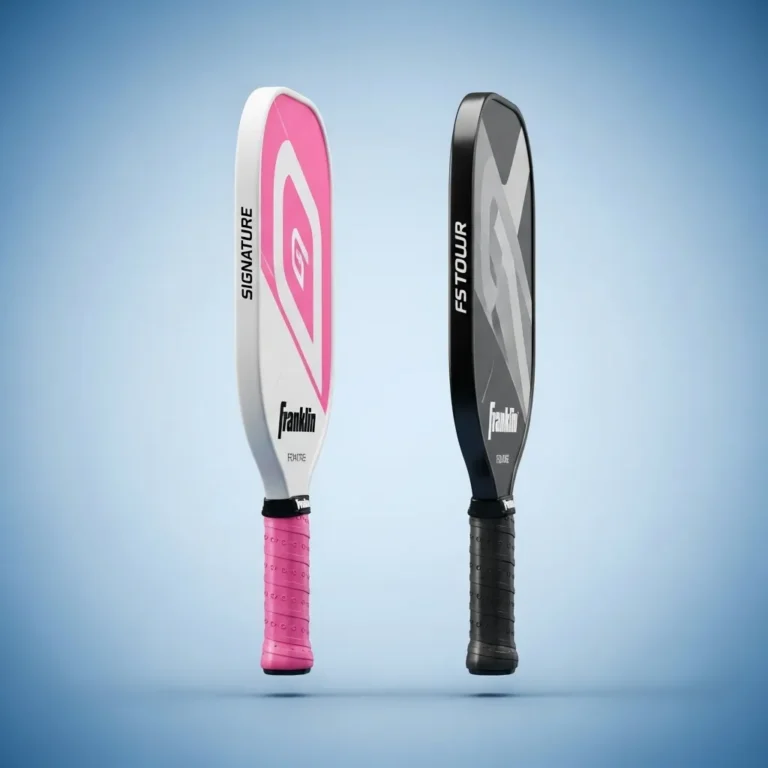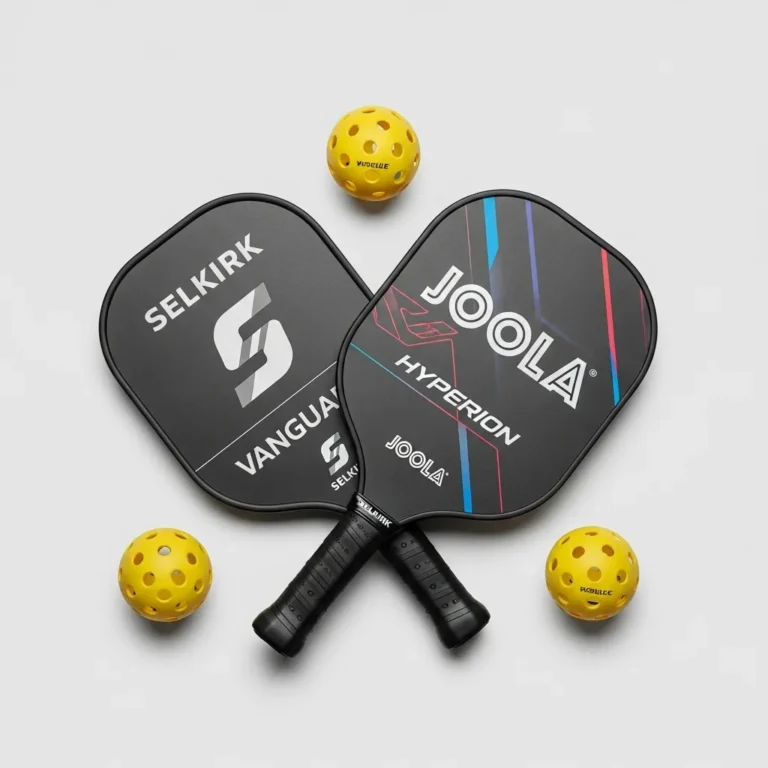

The sound of a plastic ball striking raw Toray carbon fiber tells you instantly if a paddle was built for casual weekends or engineered for the podium. Players trapped in the 3.5-rating plateau frequently blame their mechanics, yet court reality often exposes equipment that absorbs kinetic energy instead of transferring it. Dominating the kitchen line with aggressive speed-ups and surgical drop shots requires more than just drilling; it demands high performance pickleball paddles designed for maximum spin RPMs and optimal swing weight.
Whether you are analyzing the best high performance pickleball paddles 2026 has introduced to the competitive tournament scene, seeking data-driven high performance pickleball paddle recommendations, or simply needing an expert to recommend a high performance pickleball paddle under $150, securing elite carbon fiber tech is now entirely achievable without overpaying.
High Performance Pickleball Paddles Under $150
Verified Specs & Pricing · 2026
High performance pickleball paddles review: Technical Anatomy
The engineering core of any true high performance pickleball paddle centers upon its non-traditional internal setup. While legacy brands relied primarily on standard pressed honeycomb, this 2026 silhouette bridges modern aerospace materials with the rigorous kinetic constraints of elite court play, addressing deep information gaps that mainstream competitors frequently ignore.
- The Core Crushing Dilemma: Utilizing intense heat, Gen 2 thermoformed paddles fuse into a rigid unibody structure that provides massive power. However, the internal polypropylene honeycomb cells can structurally collapse under heavy impacts, creating a “trampoline effect” that temporarily surges exit velocity before rendering the paddle entirely dead and unpredictable.
- Twist Weight Dynamics: Because off-center strikes naturally generate immense torque, a low twist weight allows the paddle to twist violently in the hand. By wrapping the perimeter with foam-injected walls (Gen 1.5), brands are expanding the sweet spot horizontally, locking the paddle face into place during sharp lateral blocks and defensive resets.
- Surface Friction Mechanics: The coveted spin RPMs are primarily generated by a microscopic epoxy resin applied over the substrate (the peel ply). Independent data confirms that regardless of whether exotic Kevlar or raw carbon sits underneath, this abrasive friction layer inevitably smooths out, highlighting the strategic advantage of cycling through high-quality sub-$150 paddles rather than overpaying for a single degrading unit.
The outer surface balances ultra-lightweight maneuverability with aggressive grit retention. This friction shield prevents premature wear caused by continuous heavy top-spin drives during low defensive lunges. For players analyzing options across the entire market matrix, evaluating the dedicated structural differences outlined in our in-depth pickleball paddle reviews provides clear contextual background before buying.
Vatic Pro Prism Flash vs. Ronbus R1.16: Deciding on your Core
Navigating the direct-to-consumer family requires a clear understanding of the mechanical differences between the advanced Gen 1.5 layout and a standard cold-pressed counterpart. Selecting your specific version dictates both your defensive recovery cycles and your kinetic velocity at the non-volley zone.
Anatomical Breakdown
The Vatic Pro Prism Flash pickleball paddle focuses extensively on sweet spot expansion and structural stability. The perimeter foam injection resists axial rotation over months of intense court play, offering a highly respectable twist weight of 6.46. Conversely, the Ronbus R1.16 configuration employs a traditional, ultra-reliable standard Gen 1 cold-press design aimed at maximizing plush touch. This gives finesse-focused players a sharper sense of dwell time but slightly less horizontal forgiveness during heavy firefights.
Core Performance and Commercial Discrepancies
The denser perimeter of the Prism Flash introduces an undeniable solidness, locking in at roughly 7.93 ounces while maintaining a lightning-quick 114.2 swing weight. The Ronbus R1.16 matches this weight signature closely, providing a similarly floating sensation for nimble baseline sprinters. This variance reflects clearly across US commercial channels, where the premium Ronbus version commands a $120.00 retail price, while the critically acclaimed Vatic Pro variant disrupts the market at an highly accessible $99.99.
If you are a high-level competitor seeking to match advanced paddle dynamics with elite-tier offensive tools, exploring the definitive structural mechanics detailed in our guide to thermoformed pickleball paddles will ensure your entire equipment setup functions in perfect technical alignment.
Head-to-Head: Hudef Viva Pro Gen 2 vs. Six Zero Sapphire
For players trying to choose between the aggressive Hudef Viva Pro Gen 2 and the incredibly agile Six Zero Sapphire, the choice comes down to a fundamental split in design philosophy. Both models command top-tier placement across US retail outlets but approach court stability from completely opposing angles.
The primary differences in on-court performance are detailed in the comparison matrix below:
- Comfort and Maneuverability: The Six Zero Sapphire wins decisively on instant hand-speed, delivering a crisp, featherlight 7.8-ounce feel the very first time you grip it. The Hudef Viva Pro Gen 2 features a remarkably stiffer, thermoformed-edge structural layout that requires aggressive physical exertion to fully harness its heavier pop.
- Edge Lock-down and Support: Hudef dominates the offensive stability category through its high-heat thermoformed edges, which lock the carbon face down to prevent energy leakage on aggressive overhead smashes. The standard Gen 1 system used by the Six Zero brand provides excellent fluid touch but yields slightly more under extreme, high-velocity defensive resets.
- Lifespan and Value: If you strictly need an expert to recommend a high performance pickleball paddle under $150, both are undeniable steals. The Hudef brings thermoformed characteristics for just $99.00. However, the Six Zero Sapphire ($89.99) is universally praised for its proprietary grit application technology, which vigorously resists the rapid surface smoothing seen in standard peel-ply paddles.
For a complete, comprehensive overview of the broad variety of choices currently occupying the competitive landscape across American clubs, take a moment to read our detailed breakdown of the premier Six Zero pickleball lineup alongside the official USA Pickleball Approved Paddle List to select your ideal structural fit.
Frequently Asked Questions (FAQ)
What exactly is “core crushing” and how does it affect my game?
Core crushing occurs primarily in rigid, thermoformed paddles when the internal polypropylene honeycomb cells buckle and collapse under the stress of high-velocity impacts. While some competitive amateurs exploit this degraded state for a massive, temporary “trampoline effect” power surge, it ultimately ruins the paddle’s control, consistency, and structural integrity.
How does twist weight impact my defensive abilities at the non-volley zone?
Twist weight measures a paddle’s resistance to axial rotation during off-center strikes. A mathematically optimized, higher twist weight—often achieved through internal foam-injected edge walls—drastically expands the effective sweet spot. This allows you to effortlessly block and reset aggressive drives without the paddle twisting violently in your grip, mitigating harsh torque and physical fatigue.
Does Kevlar surface material maintain elite spin longer than raw Toray carbon fiber?
Independent laboratory testing and community data suggest that while Kevlar offers exceptional vibration dampening and a softer tactile feel (ball pocketing), it does not inherently prevent the top layer of textured epoxy from wearing smooth. The microscopic friction required for 2,000+ RPM spin degrades at similar rates across both Kevlar and raw carbon fiber substrates.