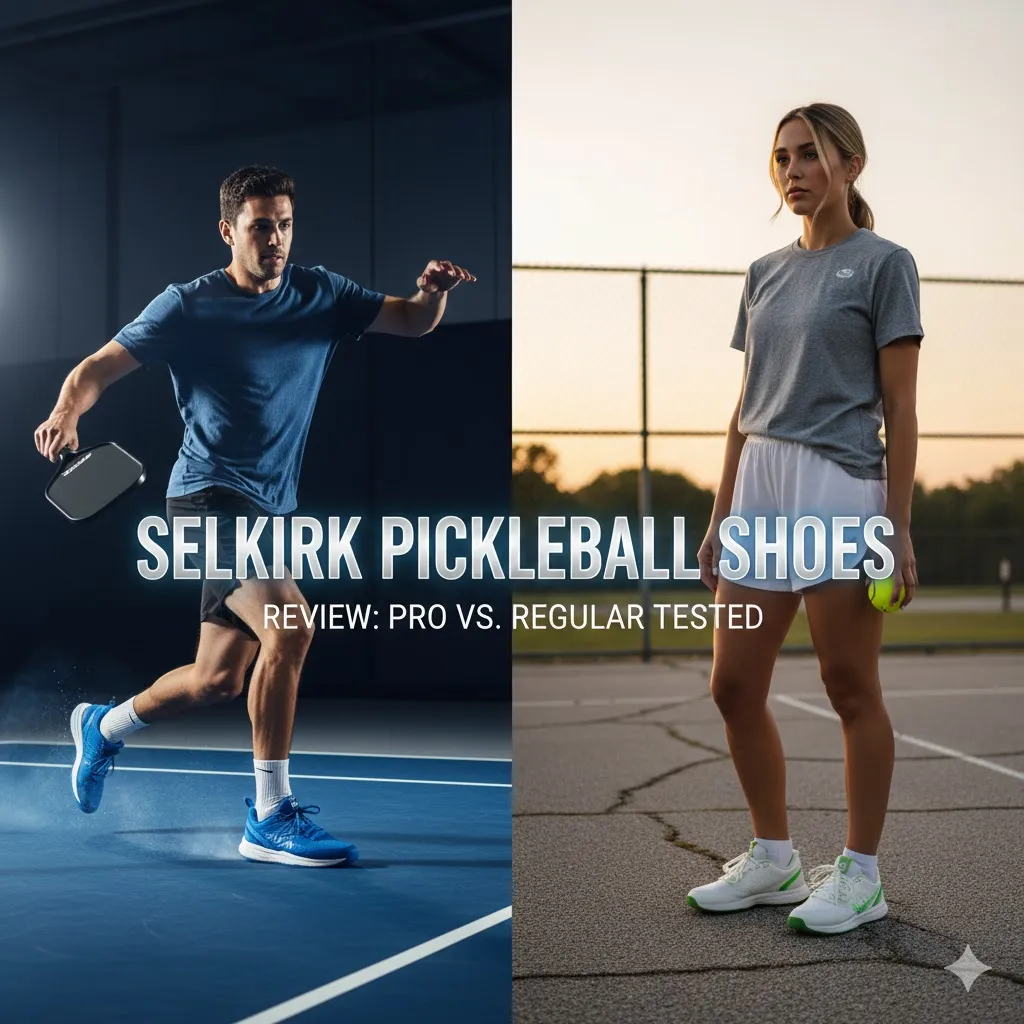
If you have spent any time on the courts, you know the name Selkirk. They are the titans of paddle manufacturing, responsible for the equipment in the hands of pros like Jack Sock and Catherine Parenteau. But when a hardware giant suddenly pivots to footwear, skepticism is natural. Can a company that masters carbon fiber surfaces really understand the biomechanics of footwork? The answer, surprisingly, is yes—but with some specific caveats that most reviews gloss over.
You are likely here because you are torn. You need stability, but you don’t want a brick on your foot. You want style, but not at the expense of rolling an ankle at the kitchen line. This is where selkirk pickleball shoes enter the conversation. Unlike generic tennis crossovers, these are engineered specifically for the unique lateral movements of pickleball.
In this unfiltered review, we are going beyond the marketing brochures. We will dissect the “missing angles” that competitors ignore: how they handle dusty gym floors, the brutal truth about the break-in period, and the specific nuances of the selkirk courtstrike pro pickleball shoes. Whether you are a tournament grinder or a recreational enthusiast, this guide will determine if Selkirk deserves a spot in your gear bag.
The Heavyweight Matchup: CourtStrike vs. CourtStrike Pro
The most common question buyers face is the price gap. Is the “Pro” label just marketing, or is there a tangible difference in performance? To understand this, we need to look under the hood of the selkirk courtstrike pickleball shoes lineup.
1. The Upper Material War: Mesh vs. Microfiber
The standard CourtStrike utilizes a traditional performance mesh. It is lightweight, breathable, and flexible right out of the box. However, the selkirk courtstrike pro pickleball shoes swap this for a premium microfiber upper. Why does this matter?
- Containment: The microfiber on the Pro model offers significantly more rigidity. When you plant your foot for a hard lateral stop, the material does not stretch. This translates to elite-level containment that prevents your foot from sliding over the midsole.
- Durability: Mesh tears. If you are a toe-dragger (someone who scrapes the top of their shoe on the court while serving or volleying), the Pro model’s reinforced upper will outlast the standard version by months.
2. The Midsole Technology
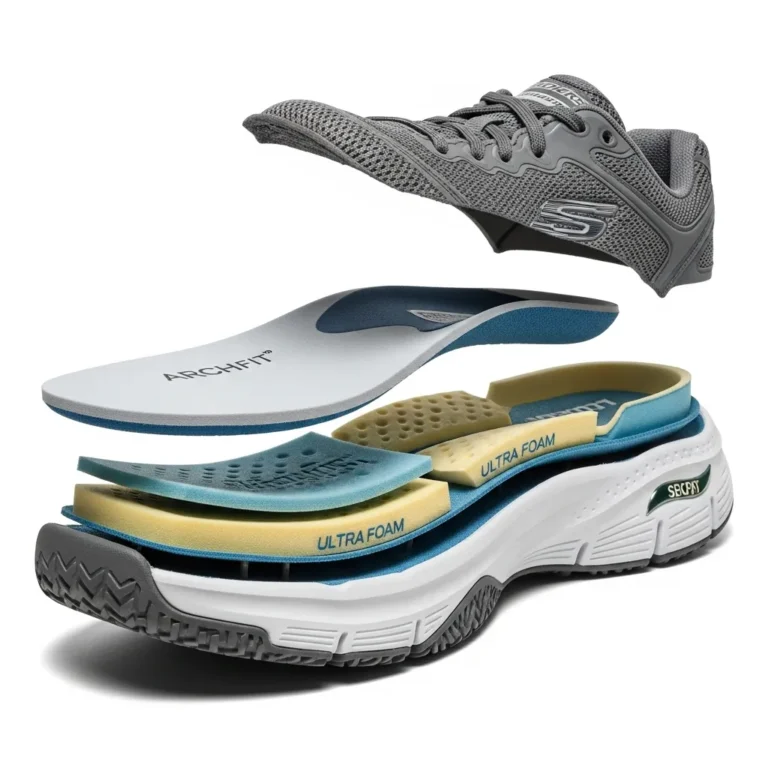
Both models feature the proprietary “Selkirk Foam,” but the implementation feels different due to the chassis construction. The Pro model feels denser. It provides a stiffer ride, which might sound uncomfortable, but is actually preferred for energy return. When you push off, you don’t want the foam to absorb all your energy like a marshmallow; you want it to snap back. The Pro delivers this responsiveness, while the standard version leans more towards plush, step-in comfort.
3. Weight Analysis: Are They Too Heavy?
A “missing angle” in many reviews is the weight comparison. Selkirk shoes are not the lightest on the market. If you are coming from an ultra-light running shoe, these will feel substantial.
- Standard CourtStrike: Comparable to the K-Swiss Express Light.
- CourtStrike Pro: Heavier, closer to the durability of the Asics Gel-Resolution.
The Verdict: If speed is your only metric, these might feel bulky. But if you value stability and joint protection, the weight is a necessary trade-off for the structure provided.
Deep Dive: Selkirk Women’s Pickleball Shoes
Female players often get the short end of the stick in footwear engineering—brands often just “shrink and pink” men’s models. However, the engineering behind selkirk women’s pickleball shoes suggests a different approach, tailored to specific anatomical needs.
The “Narrow Heel, Wide Forefoot” Dilemma
Women typically have a narrower heel relative to their forefoot compared to men. A common complaint with unisex shoes is heel slippage. Selkirk has addressed this with a specifically contoured heel cup in their women’s line. The padding around the Achilles is dense, locking the foot in place without digging into the tendon.
Toe Box Width and Bunions
One of the most critical “missing angles” for female players is toe box width. Aggressive lateral movement compresses the toes. If the toe box is too tapered, this leads to blisters, bruised toenails, and bunion pain.
selkirk pickleball shoes women feature a medium-wide toe box. It is not as wide as a barefoot-style shoe, but it is significantly more accommodating than brands like Nike, which run notoriously narrow. The shape is more squared off than pointed, allowing the toes to splay naturally when you are holding your ground at the Non-Volley Zone (NVZ).
A Note on Sizing for Women
If you are shopping for selkirk women’s pickleball shoes, be aware of the length. Most players report that they run true to size, but if you are between sizes, the recommendation is to go down a half size rather than up, as the heel lock is crucial for the shoe’s performance features to work correctly. For a broader comparison of women’s specific footwear, you can check our guide on best women’s pickleball shoes.
Sizing, Fit, and the “Break-In” Reality
Buying shoes online is terrifying. Will they fit? Will they hurt? Let’s strip away the guesswork.
The Break-In Period: The Honest Truth
Here is something Selkirk marketing won’t explicitly tell you: The CourtStrike Pro requires a break-in period. Because of the durable microfiber upper and the stiff TPU shank (the plastic piece in the sole that provides stability), these shoes will feel stiff out of the box. Do not wear them directly to a tournament.
- Day 1: Wear them around the house. They will feel rigid.
- Day 3: Play a light rec game. The heat from your foot will start to mold the foam.
- Day 7: The “flex point” at the ball of the foot will have softened, and the shoe will feel like an extension of your body.
The standard selkirk courtstrike pickleball shoes (mesh version) require almost zero break-in time, making them a better choice for impatient players or those with sensitive feet.
Sizing Guide Comparison
- Vs. Nike: Selkirks run slightly wider and shorter.
- Vs. Adidas: Very comparable in length, but Selkirk offers a deeper heel cup.
- Vs. K-Swiss: Selkirk feels more locked-in; K-Swiss tends to be roomier/looser.
For players needing exceptional comfort accessories to pair with their new kicks, upgrading your performance pickleball socks can also fine-tune the fit.
On-Court Performance: Traction & Stability
This is where the rubber meets the road—literally. How do selkirk pickleball shoes perform when you are scrambling for a drop shot?
The “Kelvin” Grip Pattern vs. Dust
Most shoes use a herringbone (zigzag) pattern. Selkirk uses a modified “Kelvin” grip pattern. This looks like a series of fragmented squares and lines.
The Dusty Court Test: This is a massive “missing angle” in reviews. Indoor courts (gym floors) are often dusty. Traditional flat herringbone patterns can trap dust and become slippery. The Selkirk pattern has wider channels between the lugs. This allows dust to escape rather than caking onto the sole. The result? consistent traction on less-than-perfect surfaces.
Lateral Containment and Anti-Roll
Pickleball is 90% lateral (side-to-side) movement. The number one cause of injury is rolling an ankle. Selkirk addresses this with a prominent lateral outrigger. If you look at the shoe from the top down, you will see the sole flares out wide on the outside of the foot.
This flange acts like a kickstand. When you push off hard to the side, the outrigger catches the floor, preventing the shoe from tipping over. For players worried about joint health, this feature is non-negotiable and aligns with injury prevention strategies discussed in our pickleball injury guide.
Durability & Value: The Investment Perspective
At their price point, selkirk courtstrike pro pickleball shoes are an investment. Do they last?
The Michelin Rubber Comparison
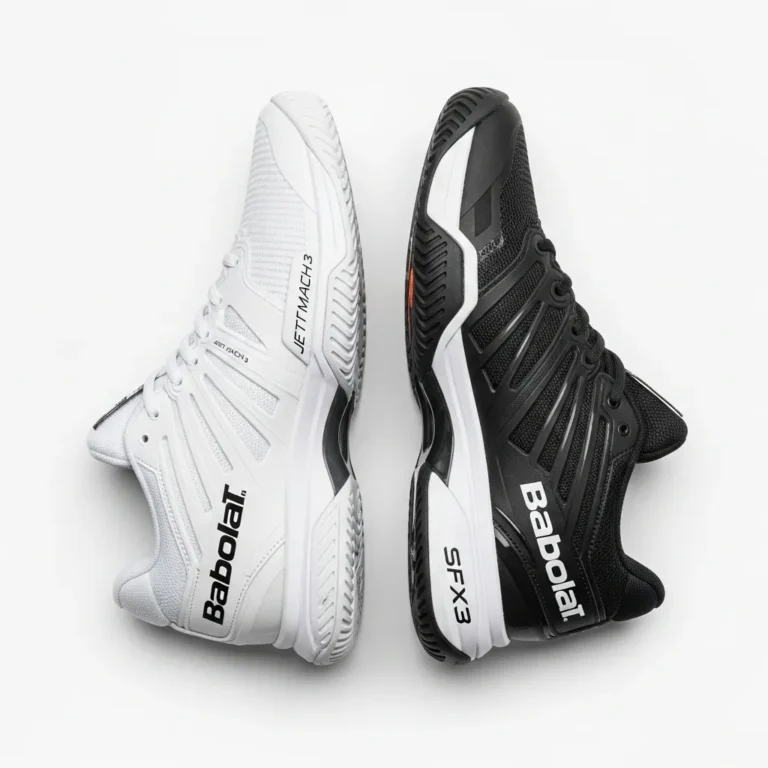
While Selkirk uses their own rubber compound, it rivals the durability of the Michelin rubber found on Babolat shoes. For a player on the court 10+ hours a week:
- Outsole Life: Expect 4-6 months of aggressive play before the tread smooths out on outdoor grit.
- Upper Integrity: This is where the Pro model shines. The microfiber does not “bag out.” Cheap shoes loosen up over time, causing your foot to slide inside the shoe. The CourtStrike Pro maintains its structural integrity until the day the sole wears out.
For players who burn through shoes rapidly, comparing these to the top durable men’s shoes reveals that Selkirk sits comfortably in the top tier for longevity.
Frequently Asked Questions (FAQ)
1. Can I wash my Selkirk pickleball shoes in the washing machine?
It is generally not recommended to machine wash the selkirk courtstrike pro pickleball shoes. The agitation and water submersion can damage the structural glues and the microfiber upper. Instead, use a soft bristle brush with mild soap and warm water to spot clean the upper and outsole. Remove the laces and insoles to wash them separately.
2. Are Selkirk shoes good for wide feet?
Selkirk shoes fit a standard D-width to a slightly wide E-width comfortably due to the ergonomic toe box. However, if you have exceptionally wide feet (2E or 4E), you might find the midfoot slightly snug. The mesh version (standard CourtStrike) offers more stretch and forgiveness for wider feet than the rigid Pro version.
3. Do these shoes have a warranty for the outsole?
Unlike some specific tennis shoe models that offer a 6-month outsole durability guarantee, Selkirk does not currently offer a specific mileage warranty on the rubber soles. However, they are renowned for their customer service regarding manufacturing defects. You can always check the latest policies on the official Selkirk footwear page.
4. Can I use Selkirk shoes for tennis?
While you can, they are optimized for pickleball. Tennis involves more long-distance sprinting and sliding on clay or hard courts. Selkirk pickleball shoes are optimized for short, explosive lateral bursts and quick stops. The tread pattern is specifically designed for pickleball court grit, which can differ slightly from tennis hard courts.
5. Why are my heels slipping in my new Selkirks?
If you experience heel slippage, first ensure you are utilizing the extra eyelet at the top of the shoe to create a “runner’s loop” or heel lock. If that doesn’t solve it, the shoes may not be broken in yet (the stiff sole can cause the heel to pull out), or you may need to size down a half-size. This is more common in the unisex sizing if not carefully measured.
Conclusion: Who Should Buy the CourtStrike Series?
Selkirk has successfully transitioned from being just a paddle company to a full-service pickleball brand. The selkirk pickleball shoes are not just white-labeled generic sneakers; they are thoughtful, purpose-built tools for the sport.
Buy the CourtStrike Pro if:
✅ You are a tournament player who destroys shoes quickly.
✅ You prioritize lateral stability and ankle protection over lightweight speed.
✅ You play on gritty outdoor courts that chew up soft rubber.
Buy the Standard CourtStrike if:
✅ You want breathable comfort immediately with no break-in time.
✅ You prefer a lighter feel on your feet.
✅ You have slightly wider feet or bunions that need flexible mesh.
Ultimately, whether you are pairing these with one of the high-end Selkirk paddles or just need better traction at your local YMCA, the CourtStrike series offers a level of specific pickleball engineering that is hard to ignore.