You plant your foot for a heavy dink, and you feel it—that slight wobble in your ankle. Or worse, the jarring impact on your knees after two hours on the hard court. If this sounds familiar, your footwear might be failing you. While brands like Skechers and K-Swiss dominate the marketing conversation, there is a “secret weapon” brand that pros have been quietly using for years to gain an edge in lateral stability.
Welcome to our deep dive into mizuno pickleball shoes. Known globally for their dominance in volleyball and tennis, Mizuno has engineered some of the most technically advanced court shoes on the planet. But do they actually work for the specific demands of pickleball? The short answer is yes, but you need to pick the right model.
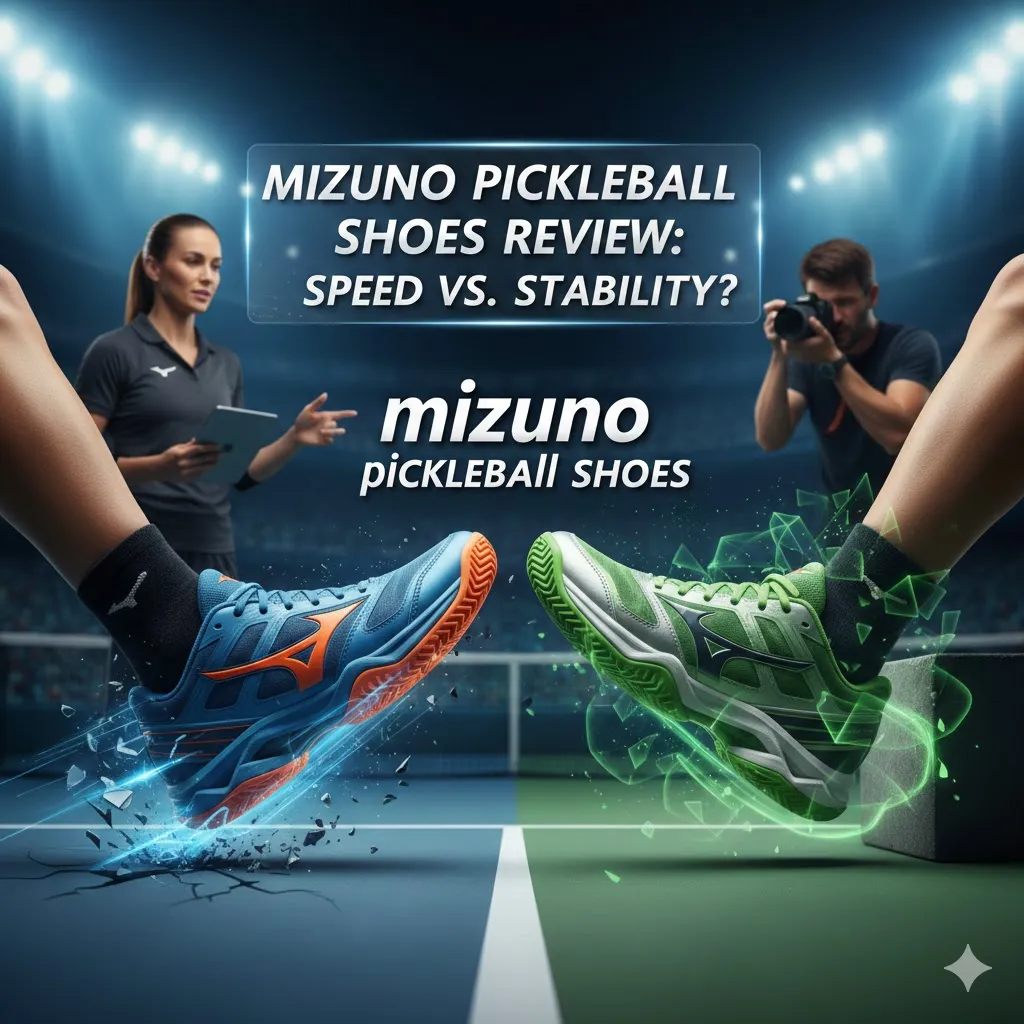
In this guide, we won’t just list shoes; we will dissect the technology, expose the “Volleyball Shoe” myth, and help you decide between the speed of the Wave Exceed and the tank-like stability of the Wave Enforce.
Does Mizuno Make “Specific” Pickleball Shoes?
If you go to a sporting goods store looking for a box labeled “Pickleball Only” from Mizuno, you might be disappointed. This is where most players get confused. Mizuno classifies their high-performance footwear under “Court Sports” (Tennis and Volleyball).
However, the mechanics of high-level tennis and pickleball are nearly identical: explosive lateral lunges, quick pivots, and sudden stops. Because of this, Mizuno’s top-tier tennis line is often superior to entry-level “pickleball specific” shoes from other brands. The key is understanding lateral stability, which is the number one defense against common pickleball injuries like rolled ankles.
To see their current lineup structure, you can check Mizuno’s court sports lineup directly.
The Tech: Why Mizuno Beats Standard Athletic Shoes
Before we review specific models, you need to understand why these shoes feel different. It comes down to one proprietary technology: The Mizuno Wave Plate.
- The Wave Plate: Unlike foam (which squishes and can be unstable), Mizuno inserts a plastic plate in the heel and midfoot. This creates a mechanical spring that disperses impact forces away from your foot while keeping your heel locked in place during side-to-side movements.
- Enerzy Foam: This is their answer to Adidas Boost. It provides a high-rebound energy return, making you feel “bouncy” on the court without sacrificing ground feel.
- X10 Rubber Outsole: This is a carbon-rubber blend designed specifically for abrasive hard courts. It is significantly harder and more durable than the rubber found on running shoes.
Mizuno Pickleball Shoes Review: The Top Models
When conducting a mizuno pickleball shoes review, we have to categorize them by playstyle. Are you a speed demon or a power player?
1. Mizuno Wave Exceed Tour 6 (The Speed Specialist)
If you are a player who relies on quick hands and even quicker feet at the kitchen line, this is your shoe. The Wave Exceed Tour series is incredibly lightweight.
- Best For: Aggressive movers who want to feel “fast.”
- The Feel: It features a 3D-Solid upper that is flexible and breathable. The D-Flex Groove in the midfoot allows you to turn on a dime.
- The Cons: Because it is lighter, it may wear out slightly faster than the heavier models on rough outdoor surfaces.
2. Mizuno Wave Enforce Tour (The Stability King)
This is the tank. If you have a history of ankle issues or you are a heavier player who needs maximum support, the Wave Enforce Tour is the better choice.
- Best For: Baseliners and players prioritizing joint protection.
- The Feel: It has a wider outsole base (outrigger) which makes it nearly impossible to roll your ankle. The upper is more rugged and rubberized for toe-draggers.
The “Volleyball Shoe” Myth: Wave Lightning & Momentum
Here is a critical angle that most reviews miss. Many players ask: “Can I wear my Mizuno Wave Lightning volleyball shoes for pickleball?”
The Answer: It depends entirely on where you play.
- Indoors (Gym Floors/Wood): YES. The gum rubber soles provide incredible grip on wood.
- Outdoors (Concrete/Acrylic): NO. The soft gum rubber will be shredded by the “sandpaper” texture of outdoor courts in less than a month. Furthermore, they lack the toe durability needed for outdoor play. Stick to the Tennis/Court line for outdoor pickleball.
Mizuno Pickleball Shoes Men: Fit & Performance
When discussing mizuno pickleball shoes men, the conversation often turns to width. Historically, Mizuno runs slightly narrow compared to American brands like New Balance. However, the new Wave Enforce Tour models have a more generous toe box than previous generations.
For men, the priority is often heel lockdown. Mizuno uses a high-density foam in the heel collar to prevent slippage. If you are looking for alternatives or want to see how other brands stack up for male players, check out our guide on the best pickleball shoes for men.
Mizuno Pickleball Shoes Women: Not Just “Pink It & Shrink It”
The market for mizuno pickleball shoes women is growing fast, and Mizuno does a great job of using specific “lasts” (shoe molds) for female feet. Women generally have a narrower heel-to-forefoot ratio than men.
Mizuno pickleball shoes for women are engineered with:
- Narrower Heel Cups: To prevent that annoying heel slip that causes blisters.
- Higher Arch Support: The Wave Plate is often tuned differently in women’s models to account for lower body mass, providing the right amount of flex without being too stiff.
- Aesthetic Variety: While performance comes first, the colorways for the women’s line (specifically in the Exceed Tour) are vibrant and stylish.
If you struggle to find the right fit with Mizuno, you might want to compare them against other top rated women’s pickleball shoes to find your Cinderella match.
Mizuno vs. The Competition
How do they stack up against the giants?
Mizuno vs. ASICS
This is the battle of Plate vs. Gel. ASICS uses Gel technology which is softer and more cushioned. Mizuno uses the Wave Plate which is firmer and more responsive. If you prefer a “cloud-like” feel, you might prefer Asics pickleball shoes. If you prefer a “spring-loaded” feel, go with Mizuno.
Mizuno vs. Skechers
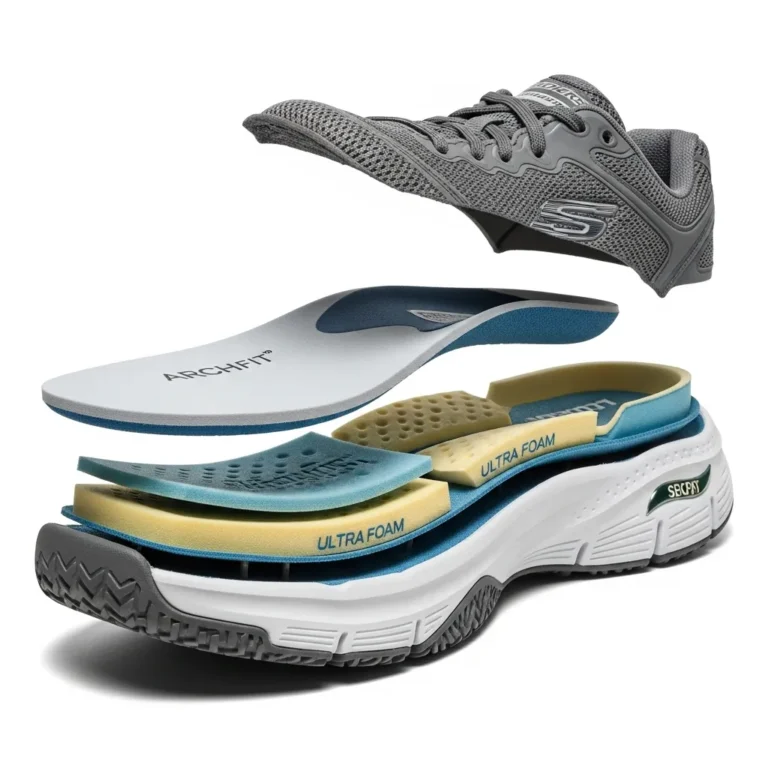
Skechers dominates the “comfort” category with their Arch Fit technology. However, regarding durability and high-performance stability, Mizuno usually wins. If you are playing casually, Skechers pickleball shoes are fantastic, but for tournament play, the tech in Mizuno is superior.
Frequently Asked Questions
Q: Do Mizuno pickleball shoes run true to size?
A: Generally, yes. However, they are known to be slightly narrower than brands like K-Swiss. If you have wide feet (2E or 4E), you may need to size up a half-size or look for their specific “Wide” models, though availability varies.
Q: Can I wear Mizuno running shoes for pickleball?
A: absolutely not. Running shoes are designed for forward motion. They lack the lateral (side-to-side) support needed for pickleball. Wearing running shoes significantly increases your risk of rolling an ankle.
Q: How long do the outsoles last on outdoor courts?
A: The Mizuno X10 rubber is very durable. For a player playing 3 times a week on outdoor surfaces, you can expect 4 to 6 months of peak performance before the tread wears down significantly.
Q: Which Mizuno shoe is best for plantar fasciitis?
A: The Wave Enforce Tour is often recommended because the stiff Wave Plate provides excellent structural support for the arch, preventing it from collapsing during play.
Final Verdict: Are They Worth It?
Mizuno might not shout “Pickleball” from the rooftops, but their footwear technology speaks for itself. If you prioritize stability, responsiveness, and durability, mizuno pickleball shoes are a top-tier investment.
For speed, grab the Wave Exceed Tour. For stability, strap into the Wave Enforce Tour. Your knees and ankles will thank you after your next match.